South Indian Blouse Designs & Saree Weaving Techniques: The Complete Guide
by Priti Sharma
16-July-2026
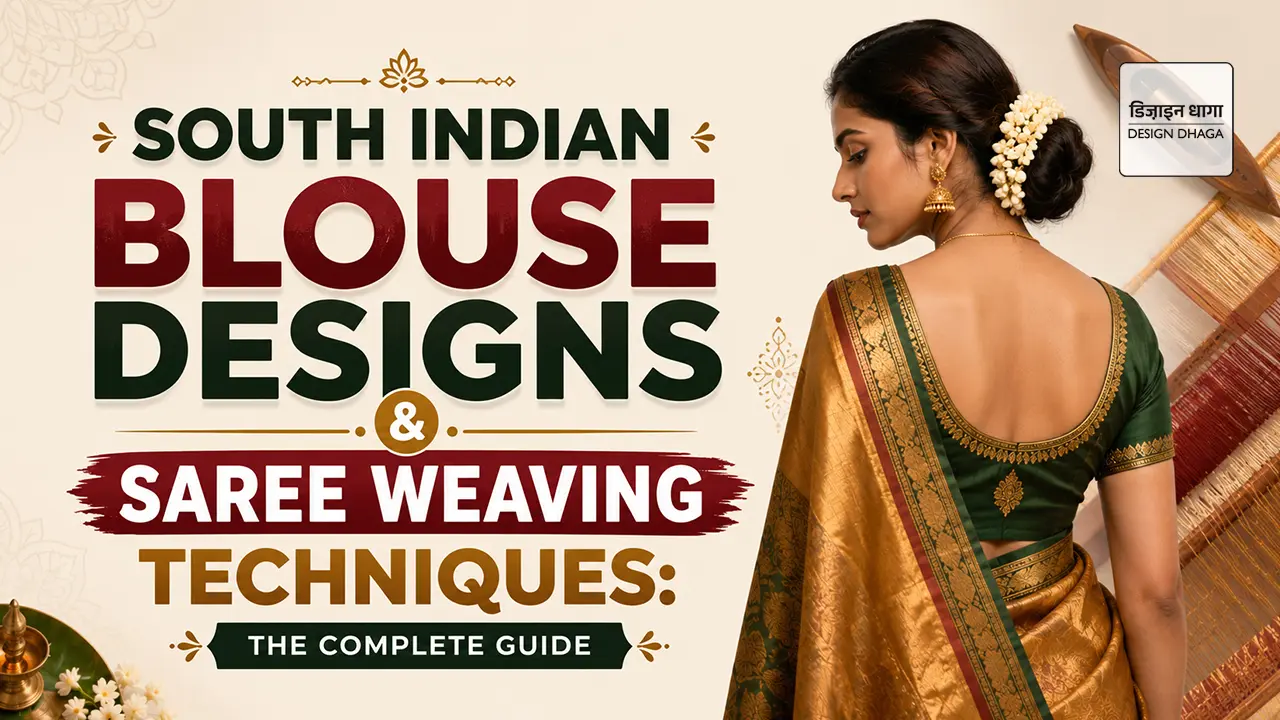
Two things determine how a saree truly looks and feels; the blouse design paired with it and the weaving technique used to make it. This guide covers both starting with South Indian blouse traditions, including the pattu pavadai worn before sarees and then unpacking the weaving techniques (tanchoi, khaddi) that give Banarasi and other silk sarees their distinct character.
Part 1: South Indian Blouse Design Traditions
Pattu Pavadai: The Saree Before the Saree

Before young girls in South India transition to wearing full sarees they typically wear a pattu pavadai a silk skirt-and-blouse set that mirrors the same temple-motif borders and rich silk found in adult Kanjivaram sarees. It's a deliberate design choice the pattu pavadai is meant to feel like a smaller-scale introduction to the same silk weaving tradition a girl will eventually wear as an adult saree.
Traditional pattu pavadai designs feature a fitted blouse with short sleeves, paired with a pleated silk skirt in contrasting or matching temple border silk. Modern pattu pavadai designs have evolved the blouse cut adding puff sleeves, boat necklines or contemporary back designs, while keeping the silk skirt and border largely traditional giving families a way to update the look for festivals and ceremonies without losing the cultural reference point.
Blouse Designs for Pattu Pavadai

When choosing a blouse design specifically for a pattu pavadai set:
- Short, fitted sleeves remain the most traditional and commonly chosen style
- Contrast-color blouses against the skirt's main silk color create visual definition, especially in photographs
- Back designs have become more decorative in modern versions simple buttons have given way to tie-back or small cutout details, echoing trends seen in adult blouse design
Banarasi Blouse Designs

Banarasi sarees with their heavy zari work need blouse designs that either complement or deliberately contrast that richness:
- Banarasi saree blouse back design: A deep V-back or U-back works well to balance the saree's heavily worked pallu and border, giving the eye a place to rest
- Banarasi blouse baju (sleeve) design: Many brides choose elbow-length or full sleeves with a band of matching zari work at the cuff, echoing the saree's border
- Front-and-back coordinated designs: For bridal wear specifically, matching the blouse's zari pattern to the saree's border (rather than choosing a plain blouse) creates a more cohesive, intentional bridal look
Part 2: Saree Weaving Techniques Explained

Tanchoi is a weaving technique not a saree type by itself, it refers to a method where intricate, often floral or paisley patterns are woven directly into the silk fabric using a satin base, rather than embroidered or printed on afterward. The technique originated through trade and craft exchange between Surat's weavers and Chinese silk traditions and produces a saree with a smooth almost glossy finish and patterns that are part of the fabric's structure not applied to it. Tanchoi sarees tend to use multiple colors woven into the same piece, giving them a richer, more dimensional look than single-color silk.
What "Khaddi" Actually Means

"Khaddi" refers to a specific handloom weaving process where the fabric is woven on a traditional pit loom, producing a slightly textured, matte finish rather than the glossy sheen of machine-woven georgette. A khaddi georgette saree combines this handloom texture with the lightweight drape of georgette popular because it photographs beautifully without the high shine that can look overly formal in daylight. A yellow khaddi georgette saree specifically has become a popular choice for haldi ceremonies and daytime festive functions, where the soft matte texture and lighter weight suit both the ritual (turmeric application) and the often-outdoor setting. Chiffon khaddi saree is a related variation using chiffon's flowier drape with the same handloom texture process.
Why the Weaving Technique Matters When Buying
Most buyers focus only on color and design, but the weaving technique determines:
- Durability: Hand-woven techniques like tanchoi and khaddi tend to outlast power-loom or printed alternatives.
- Drape: How the saree falls and moves depends heavily on the weave structure, not just the fabric type.
- Authenticity and value: Genuine handloom techniques support weaving communities directly and typically justify a higher price point than mass-produced equivalents.
Supporting Indian Handlooms :
Choosing handwoven sarees; whether tanchoi, khaddi, or regional techniques like Baluchari or tussar; directly sustains India's handloom weaving communities, many of which are multi-generational family crafts at risk of being replaced by faster, cheaper power-loom production. When shopping, asking specifically whether a saree is handloom or power-loom woven is a meaningful question, not just a technical detail.
How to Choose Based on Both Blouse and Weave

- Bridal wear: Banarasi silk (tanchoi or zari-woven) with a coordinated, deep-back blouse design
- Haldi or daytime festive wear: Yellow or pastel khaddi georgette with a simple, short-sleeve blouse
- South Indian ceremonial wear for children: Traditional or modern pattu pavadai with a silk temple-border match
Common Mistakes to Avoid
- Choosing a blouse design without considering the saree's existing pattern density an already-busy zari border paired with an equally busy blouse can look cluttered.
- Assuming all "silk sarees" use the same weaving process tanchoi, khaddi, and standard power-loom silk all behave and drape differently.
- Buying pattu pavadai sets without checking blouse sleeve length against the child's comfort ceremonial events often run long, and fit matters for movement.
Final Thoughts
The blouse design and the weaving technique are the two details most buyers overlook but they're what separate a saree that looks intentional and well-put-together from one that just matches in color. Understanding terms like tanchoi and khaddi also helps you ask the right questions when buying, especially when paying a premium for handloom work.
Explore our saree collection, along with coordinating blouse designs, at the Design Dhaga Saree Collection and Blouse Collection.
“Frequenty Asked Questions”
Q: What is the difference between tanchoi and khaddi weaving? Tanchoi is a technique for weaving intricate multi-color patterns directly into silk using a satin base, giving a glossy, dimensional finish. Khaddi refers to handloom weaving on a traditional pit loom, producing a matte, textured finish — often combined with georgette or chiffon for a lighter drape.
Q: What blouse design works best with a heavily worked Banarasi saree? A deep V-back or U-back blouse in a complementary color works well, since it balances the saree's busy zari border without competing with it. Coordinating the blouse's sleeve or back trim with the saree's border creates a more bridal, intentional look.
Q: At what age do girls typically move from pattu pavadai to sarees? This varies by family and region, but the transition is usually a personal or family milestone rather than a fixed age, some families mark it with a specific ceremony.
Q: How can I tell if a saree is genuinely handloom? Ask the seller directly about the weaving process genuine handloom pieces often have slight, natural irregularities in the weave (a sign of hand work, not a flaw) and sellers who specialize in handloom will usually be able to name the specific technique and weaving region.
.webp)
.webp)
.webp)
.webp)
.webp)
.webp)
.webp)
.webp)


 Continue with Google