Paris Haute Couture Week 2026: Everything India Achieved and What It Means for Your Wardrobe
by Divya Maherda
15-July-2026
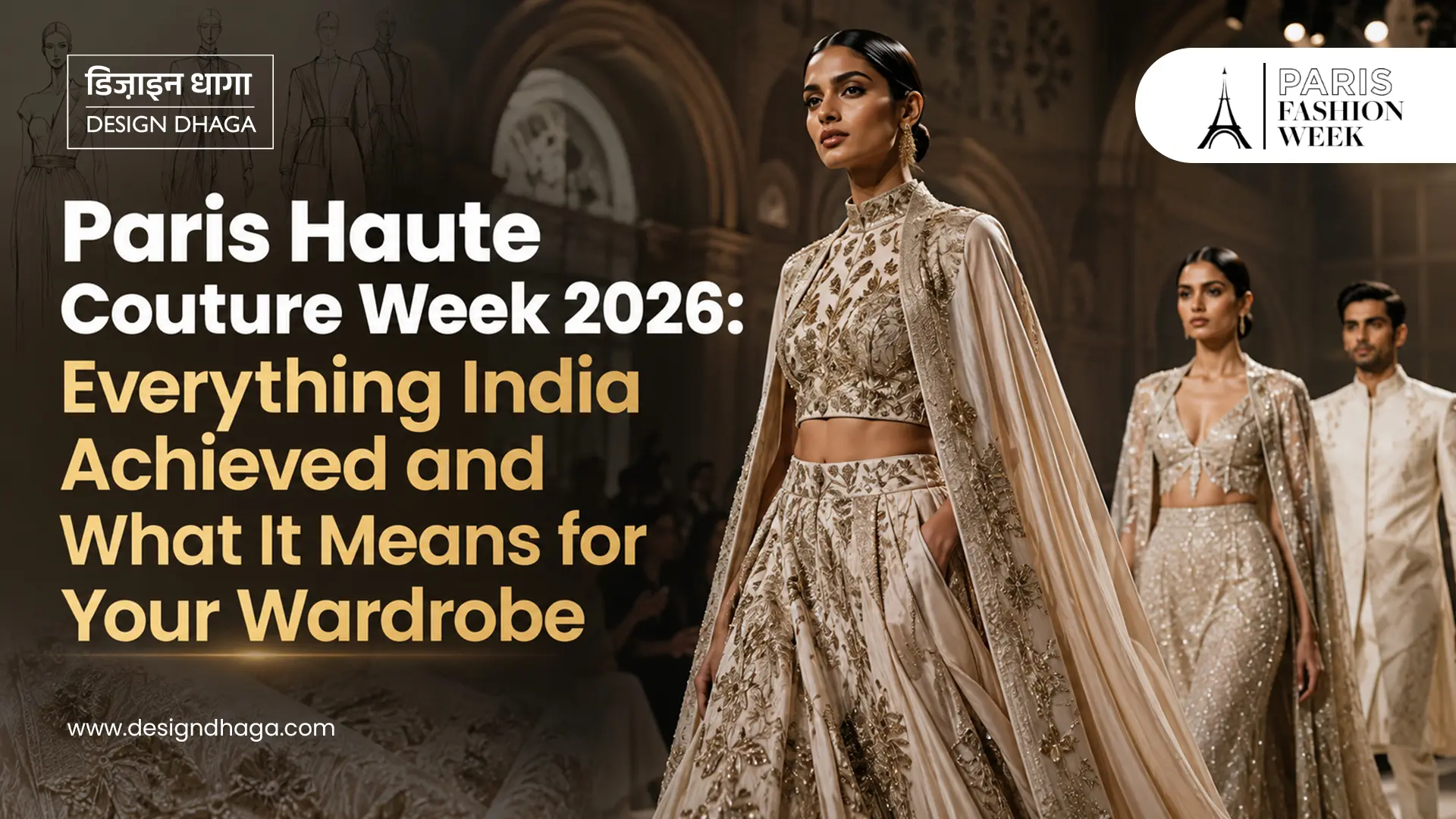
Something shifted in Paris this week and if you care about Indian ethnic wear, it matters more than any runway trend report. Between July 6 and 9 2026 Paris Haute Couture Week hosted four Indian designers on its official calendar simultaneously for the first time in history, Not as guests. Not as collaborators. As couture houses presenting their own collections in their own language on fashion's most prestigious stage.
This isn't just a fashion news story, It's the global validation of the same craft traditions - zardozi, dabka, chikankari, hand embroidery, handpainted textiles that Indian artisans have been practising for centuries. Understanding what went to Paris and why it mattered, tells you exactly where Indian ethnic wear is heading and why owning genuinely handcrafted Indian pieces right now is not just a style choice but a cultural one.
What Is Paris Haute Couture Week?

Before the collections themselves, it's worth understanding what Paris Haute Couture Week actually is because it's a significantly different category from regular fashion weeks.
Haute couture is entirely handmade, every garment produced for a tiny, elite clientele, often requiring hundreds or thousands of hours of craftsmanship per piece. Being part of the official couture calendar is considered one of the fashion industry's highest honours. The Fédération de la Haute Couture and the French Ministry of Industry set strict criteria for participation only designers meeting exacting standards of handcraft, atelier size, and technical skill qualify. Historic houses like Chanel, Dior and Schiaparelli have presented there for decades.
For an Indian designer to be included on this calendar is not just recognition, it's confirmation that Indian craft traditions meet the highest standards of international luxury. India's journey to this stage has been years in the making for years Indian ateliers supplied intricate embroidery, beadwork, zardozi and textile craftsmanship to some of Europe's biggest luxury maisons. While the finished garments walked Paris runways the artisans behind them often remained invisible. Paris Haute Couture Week 2026 changed that.
India at Paris Haute Couture Week 2026: The Historic Milestone
This year four Indian designers presented on the official Paris Haute Couture calendar Rahul Mishra, Vaishali S, Gaurav Gupta and Manish Malhotra marking a historic moment for Indian fashion.
Rahul Mishra became the first Indian designer to present on the official Paris Haute Couture calendar in 2020. His success paved the way for Vaishali S, whose handwoven textiles brought sustainable Indian craftsmanship to the global stage and later Gaurav Gupta whose sculptural couture quickly became one of Paris Fashion Week's highlights. This year Manish Malhotra became the fourth Indian designer to join the calendar.
The significance: Indian couture and jewellery are moving beyond bridal occasions into the realm of collectible luxury. Indian fashion is competing and winning at couture's highest level without diluting its identity.
Collection 1: Rahul Mishra "Devi: The Eternal Muse" (Ajanta Caves to Paris)

Of the four Indian collections Rahul Mishra's was arguably the most rooted in Indian heritage and the most technically extraordinary.
"This is the most India-inspired collection I've ever done" Rahul Mishra said of his fall 2026 couture lineup. "It's almost like time travel."
The collection drew inspiration from sculptures found across India including those at the Ajanta Caves in Maharashtra and the Hoysaleswara Temple in Karnataka. Instead of recreating historical garments, Mishra translated their forms, ornamentation and symbolism into contemporary couture.
The Craft Techniques That Went to Paris
Dense embroidery using metallic zardozi, dabka work, pearls, crystals and bugle beads recreated the texture of weathered cave walls. Draped fabrics echoed the flowing forms of apsaras seen across Ajanta.
Mishra's method was the reverse of carving. Where a sculptor removes material to reveal a form his couture accumulated it painstakingly, thread upon thread, bead upon bead. Zardozi, dabka, crystals, stones and bugle beads recreated the depth and patina of sandstone, basalt, soapstone and bronze, producing garments that appeared chiselled rather than sewn.
What this means in craft terms:
- Zardozi: One of India's oldest embroidery traditions metallic thread work using gold and silver wire, originally practised by Mughal court artisans. At its most elaborate, zardozi can take hundreds of hours per piece.
- Dabka: A type of coiled metallic wire used in embroidery creates a raised, three-dimensional effect that photographs with remarkable depth and texture.
- Bugle beads: Long cylindrical glass beads used alongside traditional embroidery adds a contemporary shimmer while maintaining handcraft integrity.
The clothes themselves are a technical flex. Zardozi and dabka techniques older than most European fashion houses, meet crystals, stones and bugle beads to build surfaces that read as carved basalt, soapstone, bronze. Then you realise the garments are featherweight. That's the trick the Rahul Mishra atelier keeps pulling off, and it never gets less impressive.
The Cultural Story Behind the Collection
The collection is built on the apsaras, devis and celestial attendants carved into the sandstone, granite and basalt of India's temples and cave sanctuaries. Look closely at those figures and you notice: they're barely clothed. Jewellery does the work of dress. Girdles, armlets, anklets, stacked necklaces, ceremonial crowns. The body is the garment and the ornament is the language.
The soundtrack went further: composer Jayant Luthra recorded mridangam, ghatam, temple drums and singing bowls inside the Ajanta Caves, then structured the compositions around Fibonacci sequences. The goal was to recreate the acoustics of the caves in a 13th-century Parisian college.
This is Indian cultural confidence at its most complete not adapting Indian aesthetics for a Western audience, but presenting India's design language, India's ancient artistic heritage and India's craft traditions exactly as they are on the world's most demanding stage.
Collection 2: Manish Malhotra "Maa" (A Love Letter in Couture)

Manish Malhotra made his haute couture debut in Paris, unveiling a collection rich in traditional craftsmanship with volume as its watchword.
The collection titled "Maa" (meaning mother) was intended as a love letter to his mother who passed away shortly before he received his spot on the official calendar.
The Gold Gown: 700 Hours of Indian Craftsmanship
The golden gown worn at the event was crafted in Mumbai with over 700 hours of intricate workmanship. It features hand-set crystals along with Indian zari-zardozi and two traditional forms of embroidery sali and taban. The design is inspired by the theme "Mother," a tribute to women whose love, strength, and dignity have shaped generations.
700 hours. A single garment. Made by Indian artisans in Mumbai. On the Paris Haute Couture stage.
The Craft Techniques
This collection places craftsmanship at its heart. Manish Malhotra cites chikankari embroidery made by women in India as well as brocades silk fabrics enriched with motifs woven in gold and silver and traditional pieces.
Two techniques specifically named that most people haven't heard of:
- Sali embroidery: A traditional Indian needle-work technique using fine metallic threads to create intricate surface patterns highly skilled, extremely time-consuming, rarely seen outside high-end Indian bridal wear.
- Taban embroidery: Another specialised metallic thread technique from India's regional embroidery traditions used alongside zardozi to create layered, dimensional surface effects.
These are not trend techniques. They are centuries-old Indian craft traditions that the world's most prestigious fashion event just placed on its highest stage.
The Collection's Visual Language
The looks blossomed with a draped cream dress covered in embroidered flowers, with dramatically high shoulders leaving the arms bare from the elbow. Volume is omnipresent hourglass dresses finished with padded ring-shaped extremities, dresses of braided threads unfurling like young ferns, and dresses and coats covered in petals.
Nurturing bonds and the idea of blooming yielded a dress that looked like stylized petals shooting outward, intricately knotted XXL silk cords that wrapped around the body and ended in cascades of golden thread.
Why This Matters for Indian Ethnic Wear - 5 Direct Implications

1. Indian Craft Techniques Are Now Global Luxury Currency
Zardozi, dabka, chikankari, sali, taban these are no longer "traditional" techniques in the limiting sense of the word. They are the techniques that Paris Haute Couture Week 2026 placed alongside Chanel, Dior, and Schiaparelli. When you buy a piece featuring genuine zardozi or chikankari embroidery, you are buying into a craft tradition that just competed at the highest level of global luxury and won.
2. Indian Artisans Are the Real Story
For years Indian ateliers supplied intricate embroidery, beadwork, zardozi and textile craftsmanship to some of Europe's biggest luxury maisons. While the finished garments walked Paris runways the artisans behind them often remained invisible. That changed. The 2026 Paris moment is the first time these artisans' work walked the runway under an Indian designer's name on the official calendar, credited to India. Buying genuine handcraft from Indian artisan-led brands is the most direct way to participate in and support what Paris just validated.
3. Handpainted and Handcrafted Is the Direction, Not Fast Fashion
The demand for genuinely handcrafted garments and transparency about who made them is stronger than ever. Buyers want to know about the karigars, the techniques, the number of hours in each piece. Fast fashion dupes of ethnic wear are facing pushback and labels built on artisan partnerships are gaining ground. This is the direct tailwind for handpainted, handcrafted ethnic wear. The Paris moment accelerates a direction that was already moving.
4. Ancient Indian Heritage Is High Fashion
Indian culture is enjoying one of its strongest moments on the global fashion stage. Indian designers are telling those stories themselves. The Ajanta Caves, the Ajanta Caves temple sculptures, ancient Indian goddesses these weren't adapted for a Western audience. They were presented exactly as they are and Paris received them as world-class couture. Wearing ethnic wear that references Indian heritage regional weaves, traditional motifs, ancient craft techniques is not conservative or old-fashioned. It's the direction global luxury fashion is moving.
5. Volume Is Back - But with Craft, Not Clutter
Both collections used significant volume sculptural silhouettes, petal-covered layers, architectural shoulders. But in both cases the volume was driven by craft, not decoration. Mishra treated antiquity as a living surface, one capable of becoming sharp, sensual and distinctly contemporary. The tension between monumentality and exposure ran throughout the show. For Indian ethnic wear: this validates fuller silhouettes (anarkalis, wide-skirt lehengas, dramatic dupattas) when the volume is supported by genuine craft detail rather than synthetic embellishment.
The Indian Craft Techniques That Went to Paris: A Buyer's Guide

Understanding what these techniques actually are helps you identify and choose them when buying ethnic wear:
Zardozi
India's most ancient metallic embroidery tradition, originating in Mughal court ateliers. Uses gold and silver wire, sequins, and metallic threads to create raised, three-dimensional patterns. Genuine zardozi is entirely hand-done the wire is bent, coiled, and stitched by hand using a hooked needle. It is heavy, formal, and appropriate for the highest-occasion ethnic wear. Machine-made approximations exist but lack the raised texture and depth of genuine hand-worked zardozi.
Dabka Work
Coiled metallic wire laid along a pattern line and couched (stitched down) by hand, creating a raised metallic outline effect. Often combined with zardozi to define pattern boundaries. The raised quality of dabka work is what creates the almost sculptural quality seen in the Paris collections. the technique literally builds surface relief into fabric.
Chikankari
White thread embroidery on white or pastel fabric, traditionally made in Lucknow by women artisans. One of India's most recognised embroidery traditions — delicate, intricate, and highly skilled. Contemporary chikankari uses coloured thread and gold thread variations, but the traditional white-on-white version remains the most refined. When Manish Malhotra cited chikankari as central to his Paris collection, he placed one of India's most democratic craft traditions (chikankari is more accessible price-wise than zardozi) on the world's most exclusive stage.
Sali Embroidery
A specialised needle-work technique using fine metallic threads in a flat stitch creates intricate surface patterns with a smoother, less raised finish than zardozi. Less commonly known than zardozi but equally skilled. Featured specifically in the 700-hour gold gown that defined the Paris moment.
Taban Embroidery
Another fine metallic thread technique from India's regional embroidery traditions, used to create layered effects alongside zardozi. Like sali, relatively unknown outside specialist Indian craft circles, its appearance on the Paris stage is exactly the kind of visibility these techniques deserve.
Handpainted Textiles
While not specifically a Paris collection feature, handpainted ethnic wear belongs in this conversation directly. A handpainted textile, where an artisan applies colour and pattern directly to fabric by hand shares the same fundamental philosophy as every craft technique that went to Paris: human skill, human time and human creativity applied directly to the garment. No machine can replicate what a skilled artisan's hand produces.
How to Apply the Paris Inspiration to Your Wardrobe

You don't need couture prices to wear what Paris validated. You need the same philosophy: genuine craft, worn with intention.
For Wedding Occasions
Choose a saree or lehenga that features at least one genuine handcraft technique real zardozi, actual chikankari or authentic hand embroidery. Ask specifically whether the embroidery is hand-done. The answer changes the value of the piece entirely. A genuine hand-embroidered piece worn simply and styled with restraint carries the Paris gold couture aesthetic far more authentically than a heavily machine-embellished piece worn with maximum accessories.
For Festive Occasions
The Ajanta Cave inspiration - ancient Indian motifs, temple architecture, floral and apsara forms translates directly into everyday festive choices. Block-printed or handpainted ethnic wear featuring traditional Indian motifs (floral, geometric, peacock, paisley) participates in the same cultural conversation that Rahul Mishra brought to Paris, just at a different scale and price point.
For Contemporary Everyday Ethnic Wear
Chikankari is the most wearable, most accessible of the Paris craft traditions, a chikankari kurta or anarkali is appropriate for office, festive and casual occasions and the technique's delicacy means it reads contemporary rather than heavily traditional. After Paris 2026, chikankari is officially world-class couture wearing it to the office is the most understated luxury move available in Indian ethnic wear.
What to Look for When Buying Handcrafted Indian Ethnic Wear
The Paris collections showed the world what genuine Indian craft looks like at its highest expression. Here's how to identify genuine handcraft at any price point:
- Ask about the specific technique: A seller who can name the embroidery type (zardozi, chikankari, kantha, mirror work etc.) and explain what makes it specific to that technique is selling genuine craft. A seller who says "heavy embroidery" without specifics probably isn't.
- Check the reverse side: Genuine hand embroidery shows clean, even knots on the back of the fabric. Machine embroidery shows dense uniform backing threads.
- Look for natural variation: Handcrafted pieces embroidered, handpainted, or handwoven have slight natural variation in their patterns. This is a feature, not a flaw. Perfectly uniform embroidery or print is a sign of machine production.
- Ask about the artisan: A brand that can tell you who made the piece, which community they're from and how long it took is the kind of brand the Paris moment validated. Transparency about craft process is the mark of genuine artisan partnership.
The Bigger Picture: Why Indian Fashion's Paris Moment Is Your Moment Too

Fashion has always looked to India for inspiration. Luxury houses have referenced Indian embroidery, gemstones, textiles and craftsmanship for decades. What feels different now is that Indian designers are telling those stories themselves.
That shift from supplying craft to other people's stories to owning the narrative is exactly what happened at Paris Haute Couture Week 2026. Four Indian designers. Four collections rooted in Indian heritage. On the official calendar. Presented in their own language with their own cultural references, to the world's fashion editors, buyers, and collectors.
The techniques they used zardozi, dabka, chikankari, sali, taban, hand embroidery are the same techniques that Indian artisans have been practising for centuries. The difference is that Paris just told the world they're worth paying attention to.
They always were.
Explore our collection of handpainted and handcrafted ethnic wear, where every piece is made by skilled Indian artisans in traditional techniques with no machine shortcuts at Design Dhaga.
“Frequently Asked Questions”
Q: Which Indian designers presented at Paris Fashion Week 2026? Four Indian designers presented on the official Paris Haute Couture Week calendar in July 2026 Rahul Mishra, Vaishali S, Gaurav Gupta and Manish Malhotra. This was the first time four Indian designers appeared simultaneously on the official Paris Haute Couture calendar.
Q: What is zardozi embroidery and why is it significant? Zardozi is one of India's oldest metallic embroidery traditions, originating in Mughal court ateliers. It uses gold and silver wire, sequins, and metallic threads to create raised, three-dimensional patterns entirely by hand. It was featured prominently in both major Indian collections at Paris Haute Couture Week 2026, confirming it as one of the world's great embroidery traditions.
Q: What is dabka work in Indian embroidery? Dabka work uses coiled metallic wire laid along a pattern line and stitched down by hand, creating a raised metallic outline effect. It is often combined with zardozi and creates the almost sculptural surface quality that characterised Rahul Mishra's Paris 2026 collection, where the embroidery literally built relief into the fabric, making garments appear carved from stone.
Q: How does the Paris Haute Couture Week 2026 moment affect Indian ethnic wear buyers? The Paris moment validates what India's craft traditions have always represented exceptional handcraft, centuries of artisanal skill, and cultural heritage expressed through textiles. For buyers, it's confirmation that choosing genuinely handcrafted Indian ethnic wear whether zardozi, chikankari, handpainted, or handwoven is not just a traditional choice but a global luxury choice, at the same level as the world's most prestigious couture houses.
Q: What is chikankari embroidery? Chikankari is a traditional white thread embroidery technique from Lucknow, traditionally made by women artisans. It uses delicate needle work to create intricate floral and geometric patterns on white or pastel fabric. Manish Malhotra cited chikankari as central to his Paris debut collection, placing one of India's most accessible craft traditions on the world's most exclusive fashion stage.
.webp)
.webp)

.webp)
.webp)


 Continue with Google