Why Indian Brides Are Choosing Artisan Bridal Lehenga Over Heavy Embroidery Clothes
by Priti Sharma
7-July-2026
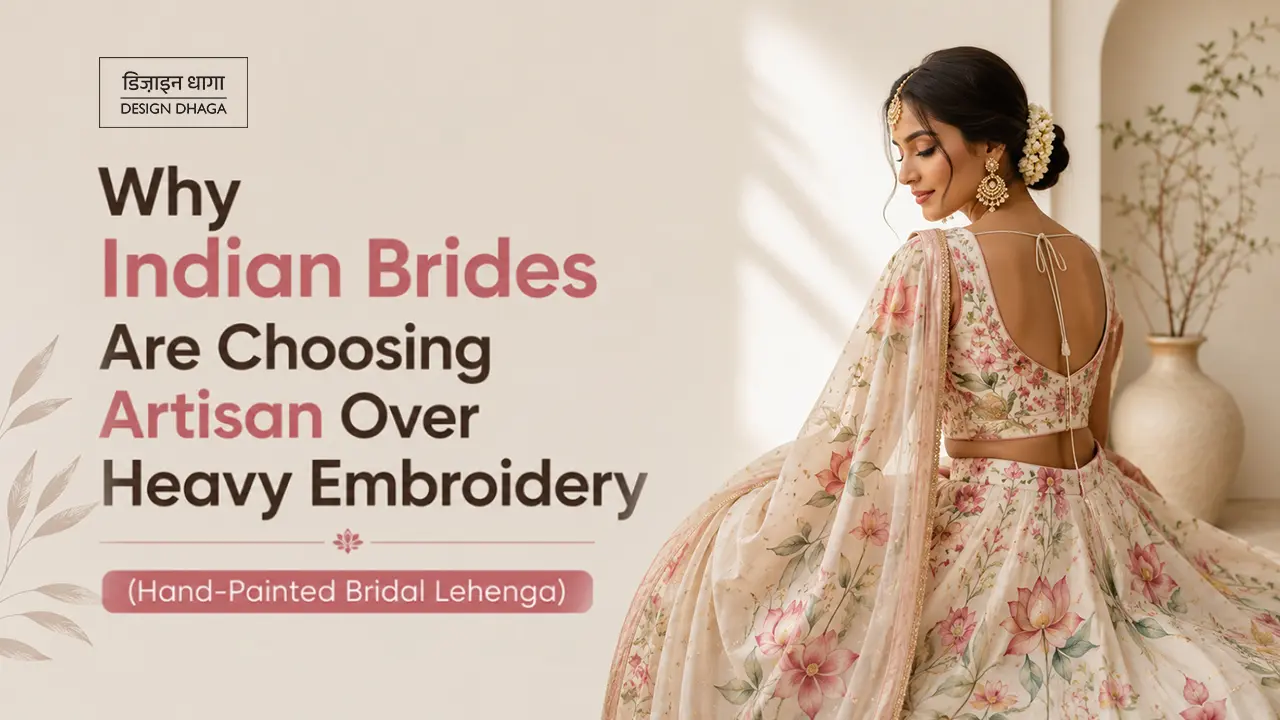
Here's something worth thinking about before you start your bridal lehenga search: the most common regret brides share after their wedding isn't about the venue or the food or even the guest list. It's about the outfit. Not because it wasn't beautiful, most bridal lehengas are beautiful. But because it looked exactly like three other lehengas at the same wedding.
That's not a small thing. Your bridal lehenga is the one outfit in your life that gets photographed from every angle at every moment for an entire day. It goes into albums that come out at anniversaries at your children's weddings at family get-togethers twenty years from now. It deserves to be genuinely yours, not a version of something everyone else already has.
This is exactly why more Indian brides are looking beyond the usual showroom circuit and asking a different question:
What if my lehenga was actually made for me by hand by someone who put real time and craft into it?

That question leads straight to hand-painted bridal lehengas and once you understand what makes them different. it's hard to look at a rack of machine embroidered options the same way again.
What Is a Hand-Painted Bridal Lehenga?
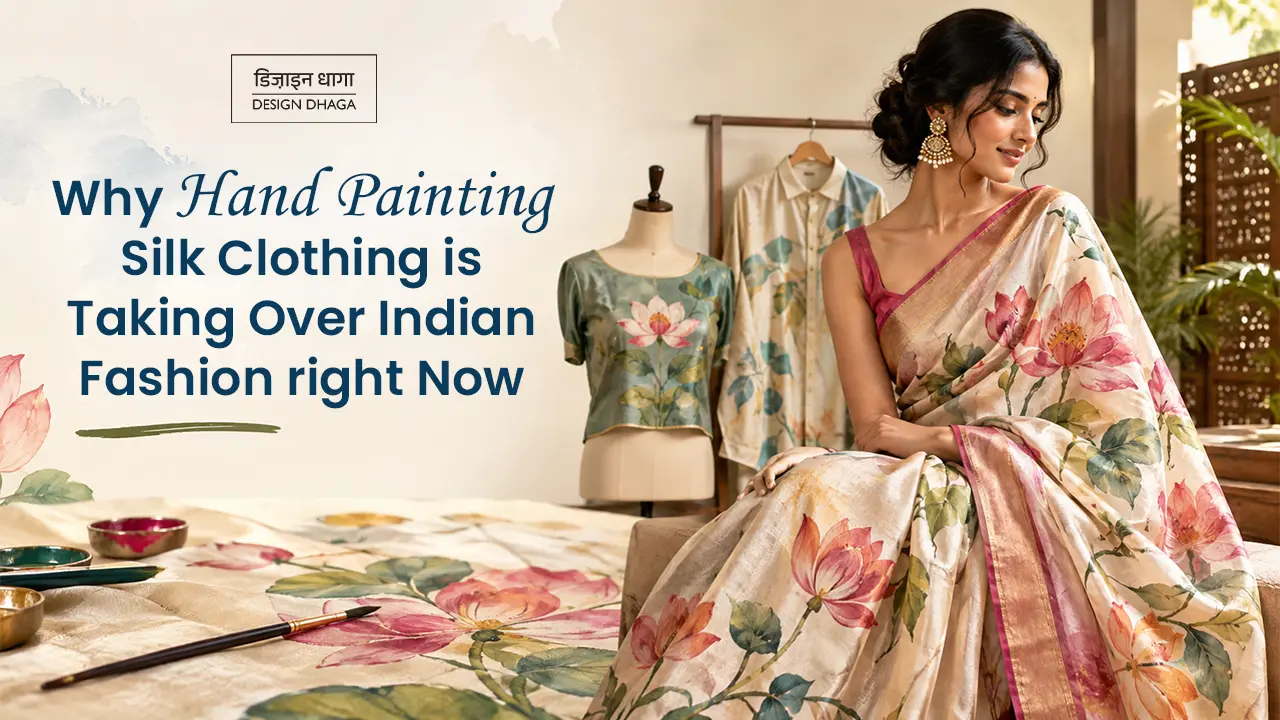
A hand-painted lehenga is exactly what it sounds like an artisan, a real person with real training and real skill applies the design directly onto the fabric using fabric paints, dyes and brushes. No machine involvement in the decorative work. No two pieces come out identical because no two human hands work identically.
This is fundamentally different from how most bridal lehengas are made. Standard machine embroidery uses programmed patterns that get reproduced across hundreds of pieces. Block printing uses carved stamps that repeat the same motif across the fabric. Digital printing transfers a computer-generated image onto fabric. All of these are perfectly valid techniques but none of them produces something that's genuinely unique.
A hand-painted lehenga does. The motif on your lehenga exists only on your lehenga. That's not marketing language, it's just how the process works.
Why Brides Are Moving Toward Artisan Bridal Wear

The shift happening in Indian bridal fashion right now is real and it's documented. Brides are pushing back against heavy, rigid, machine-produced lehengas in favour of pieces that are lighter, more personal and more honest about what they are.
A few things are driving this:
The weight problem is finally being taken seriously. The era of the 10kg lehenga that required two people to help the bride walk is ending. Modern brides want to actually move to dance, to hug their family, to sit through a three-hour ceremony without feeling like they're wearing armour. Hand-painted lehengas because they rely on painted craft rather than layers of heavy thread and sequin work, tend to be significantly lighter than their heavily embroidered counterparts.
Brides want to stand out not blend in. When every major bridal brand is using the same machine-embroidery techniques on the same silhouettes, everything starts to look similar. A hand-painted piece breaks that pattern entirely. The motifs are different. The colour application is different. The whole visual character of the garment is different in a way that's immediately visible.
There's a growing appreciation for craft that has a human story behind it. A lehenga made by a machine in a factory is a product. A lehenga where an artisan spent days painting each motif by hand is something else. it carries the maker's time, attention and skill in a way that matters to brides who care about what their clothes actually are.
Hand-Painted vs Heavy Embroidery

An Honest Comparison. This isn't about one being better than the other across the board. It's about understanding what each technique actually gives you so you can make a real choice.
Weight and comfort: Heavy embroidery particularly zardozi, gota work, and dense sequin coverage adds significant weight to a lehenga. This can make it genuinely difficult to wear for long stretches. Hand-painted detailing adds almost no weight since it's applied directly to the fabric rather than layered on top of it.
Uniqueness: Machine embroidery produces identical pieces. Hand-painting produces one-of-a-kind pieces. If uniqueness matters to you, this is the clearest distinction between the two.
Visual character: Embroidery has a textural dimensional quality that catches light in a specific way. Hand-painting has a more fluid, painterly quality, it can range from bold and graphic to delicate and watercolour-like depending on the artisan's technique and the design. Neither is objectively better; they just look different and the question is which look suits you and your wedding.
Longevity: Well-applied fabric paint on quality fabric lasts extremely well. It doesn't fray, loosen, or snag the way embroidered thread sometimes does over time. A hand-painted lehenga cared for properly can genuinely last decades without the decorative work deteriorating.
Cost: This varies enormously by the complexity of the design and the artisan's skill level but hand-painted bridal pieces are often more accessible than heavily embroidered couture lehengas. while offering something those mass-produced pieces can't genuine individuality.
How to Choose Your Hand-Painted Bridal Lehenga

Choosing a hand-painted bridal lehenga involves a few considerations that are slightly different from choosing a standard embroidered one.
Think about the motif first not the colour. With an embroidered lehenga, the technique largely determines the visual outcome. With a hand-painted lehenga the motif is everything, it's what the artisan will be expressing on your fabric. Traditional florals, geometric patterns, nature-inspired designs (birds, vines, leaves), abstract brushwork or even personalized elements like a date or a meaningful symbol all of these are possible. Decide what kind of visual story you want your lehenga to tell before you decide on colour.
Choose the base fabric carefully. Hand-painting works on a range of fabrics, but the results differ significantly. Silk gives the most luminous rich base colours appear deeper and the fabric has natural movement. Cotton-silk blends are lighter and more breathable, good for daytime or warm-weather weddings. Georgette takes paint with a beautiful softness that works well for flowy, lighter designs. Talk to the artisan about which fabric suits the design you have in mind.
Understand that custom takes time. A hand-painted bridal lehenga that's made specifically for you isn't something you can order and receive in a week. Good custom artisan work takes time, typically three to six weeks depending on the complexity of the design. If you're planning a wedding in the October–February peak season, start the conversation now, in July, to give yourself enough room.
Ask to see the artisan's previous work. Any serious hand-painted clothing artisan will have a portfolio of past work. Look at how the paint sits on the fabric, how the colours transition, how consistent the detailing is across different sections of a garment. This tells you far more than a product photo on a website.
Don't overlook the blouse: The blouse on a bridal lehenga arguably gets more close-up attention than the skirt. it's what people see in portrait photographs in the rakhi-tying moments, in the close-up shots throughout the day. A hand-painted blouse design that complements but doesn't compete with the skirt is worth thinking about carefully. Some brides choose a more elaborate painted design on the blouse and a simpler painted border on the skirt; others reverse this. There's no single rule, but the blouse deserves as much thought as the lehenga itself.
Colours That Work Beautifully for Hand-Painted Bridal Lehengas
Hand-painting opens up the colour palette in a way that standard embroidery sometimes doesn't, because the artisan can mix and layer colours directly on the fabric.
Classic bridal reds and deep maroons look stunning with hand-painted gold and amber motifs the painted work gives the colour a warmth that differs from the harder shine of machine zari.
Pastels dusty pink, sage green, ivory, soft lavender are having a genuine moment in 2026 bridal fashion and hand-painting suits them beautifully. The technique allows for delicate, watercolour-like detailing that feels right with soft colours in a way that heavy embroidery sometimes doesn't.
Jewel tones emerald, sapphire, deep teal with hand-painted gold or copper detailing create a richness that feels both traditional and contemporary.
Ivory and off-white bases with intricate hand-painted motifs in a single colour (deep red, navy, forest green) give a graphic, striking look that photographs extremely well.
Styling Your Hand-Painted Bridal Lehenga

Because the painted fabric itself is doing the visual work, styling choices around a hand-painted lehenga can afford to be simpler than with a heavily embroidered piece.
Jewellery Let the lehenga lead. A hand-painted bridal lehenga with a strong motif doesn't need to compete with elaborate layered jewellery. One statement piece a maang tikka, a substantial neckpiece, or statement earrings is usually enough. Trying to add every piece at once risks drowning out the craft of the garment itself.
Dupatta styling A hand-painted dupatta that coordinates with the lehenga without being identical to it is a beautiful pairing. Some brides choose a plainer dupatta in a matching fabric to let the lehenga be the focal point; others choose a dupatta with complementary painted detailing. Either works the key is that the two pieces feel like they belong together without being identical.
Footwear Keep it simple. Traditional juttis in a coordinating colour or metallic sandals work well. The outfit is already doing significant visual work; the footwear doesn't need to add to it.
What to Ask Before You Commission a Hand-Painted Lehenga

Before you place an order for a custom hand-painted bridal lehenga, a few questions are worth asking directly:
What fabric do you recommend for my design and wedding season?
A good artisan will give you a considered answer based on the specifics of your situation, not a generic recommendation.
How long will this take from design confirmation to delivery?
Get a clear timeline and build in buffer time before your wedding.
What care instructions apply to this specific piece?
Hand-painted fabric requires specific care typically gentle hand washing or dry cleaning, no harsh detergents, and proper storage away from direct sunlight. Make sure you understand what your lehenga needs before you take it home.
Can I see swatches of the fabric and paint colours before you begin?

A good artisan will be able to show you colour samples and fabric swatches so there are no surprises when the finished piece arrives.
Final Thoughts
A bridal lehenga is one of the most significant garments you'll ever wear not just in terms of cost, but in terms of what it means and how long it stays with you in photographs, memories, and family history. The question worth sitting with isn't just "does it look beautiful?" It's "is it mine?"
A hand-painted bridal lehenga answers that question definitively. It was made for you by hand, by someone who put real skill and time into it. No other bride is wearing the same thing. That's not a small distinction.
If you're drawn to the idea of a bridal lehenga that's genuinely one of a kind, browse our hand-painted bridal lehenga collection or get in touch with us directly on WhatsApp +919671941303. custom work and artisan pieces are what we do and we'd love to talk through what you have in mind. You can also explore our blouse designs collection for hand-painted blouse options to complete the bridal look or our full lehenga choli collection for more styles.
"Frequently Asked Questions"
Que: What is a hand-painted bridal lehenga?
A hand-painted bridal lehenga is a lehenga where the decorative design is applied directly onto the fabric by an artisan using fabric paints and brushes, rather than machine embroidery or block printing. Because each piece is painted by hand, no two are exactly alike making it genuinely one of a kind.
Que: How is a hand-painted lehenga different from an embroidered one?
The main differences are weight, uniqueness, and visual character. Hand-painted lehengas are significantly lighter than heavily embroidered ones since the decoration is applied to the fabric rather than layered on top. They're also genuinely unique an embroidered lehenga produced by machine can be replicated identically while a hand-painted one cannot. Visually painted work has a fluid, painterly quality that differs from the dimensional texture of embroidery.
Que: How long does a custom hand-painted bridal lehenga take to make?
Depending on the complexity of the design, a custom hand-painted bridal lehenga typically takes three to six weeks from design confirmation to delivery. For wedding season (October–February), it's advisable to start the conversation at least two to three months in advance.
Que: What fabrics work best for a hand-painted bridal lehenga?
Silk, cotton-silk blends and georgette all work well for hand-painted bridal lehengas. Silk gives the richest most luminous base and is ideal for traditional wedding ceremonies. Cotton-silk blends are lighter and more breathable, good for daytime or warm-weather weddings. Georgette takes paint with a beautiful softness that suits flowy, delicate designs.
Que: How do I care for a hand-painted bridal lehenga?
Hand-painted fabric should be hand-washed gently or dry-cleaned, depending on the base fabric. Avoid harsh detergents, prolonged soaking, and direct sunlight when drying or storing. Proper storage folded carefully in muslin or a breathable garment bag will help the painted work last for many years.
Que: Can I get a hand-painted lehenga customised with my own design or motif?
Yes Custom hand-painted bridal lehengas can be made to your specifications, including personalized motifs, colour combinations and even meaningful symbols or dates incorporated into the design. Contact us on WhatsApp +919671941303 or email artinfo@designdhaga.com to discuss your requirements.
Que: Is a hand-painted bridal lehenga more expensive than a standard embroidered one?
It depends on the complexity of the design and the artisan's skill level. Hand-painted bridal lehengas are often more accessible than heavily embroidered couture pieces. while offering genuine uniqueness that mass-produced embroidered lehengas cannot. For custom work, pricing depends on fabric choice, design complexity and the time required.
.webp)
.webp)
.webp)

.webp)

.webp)
.webp)


 Continue with Google