Hand-Painted Fabric Techniques Explained And Why They Make Your Clothes Worth Keeping Forever
by Design Dhaga Team (trusted sources)
28-May-2026
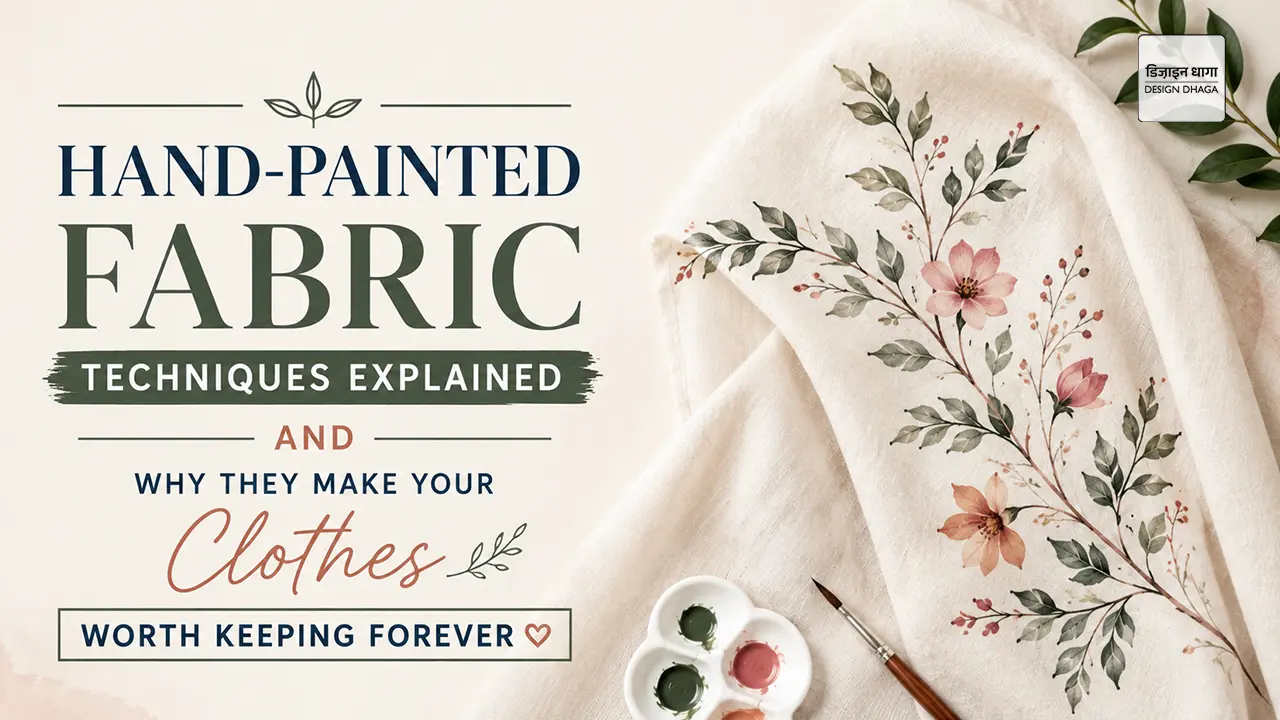
Have you ever looked at a hand-painted kurta or dress and thought how do they even do that?
Because honestly, it's not just "someone painted on a shirt." There's a whole process behind it. Different tools, different paints, different ways of preparing the fabric and the technique you choose changes everything about how the final piece looks, feels, and lasts.
At Design Dhaga, our artisans have spent years working across multiple hand-painting methods. Some techniques are bold and graphic. Some are delicate and watercolour-soft. Some work beautifully on cotton. Others come alive on silk.
So let's actually talk about it the real techniques behind hand-painted fabric, explained simply.
First, Why Does the Technique Even Matter?
Here's something most people don't know: two artists can both call their work "hand-painted clothing," but if they're using different techniques, the results look completely different and hold up completely differently over time.
- The technique determines:
- Hos sharp of soft the lines are
- Whether the colors stay vibrant after washing
- How the fabric feels to wear
- How Long the at lasts
- Whether the piece is truly one-of-a-kind
That's why we're particular about technique at Design Dhaga. It's not just about making something look pretty. It's about making something that genuinely holds up and genuinely can't be replicated by a machine.
The Main Hand-Painted Fabric Techniques We Use
1. Free-Hand Brush Painting

This is the most direct form of fabric painting an artist, a brush, and the fabric. No stencils. No guides. Just skill.
Free-hand painting is where you really see an artisan's personality come through. The brush strokes, the way the paint is layered, the tiny decisions made in real time all of that shows up in the finished piece.
We use this technique for florals, abstract patterns, and detailed figurative work on our women's kurtis and dresses. Every stroke is intentional. And because it's all done by hand, the same design painted twice by the same artist will still be subtly different each time. That's not a flaw. That's the point.
Best for: Detailed motifs, botanical prints, flowing patterns
Fabric types: Cotton, linen, khadi
The result: Soft edges, layered depth, genuinely unique pieces
2. Block Printing + Hand-Painting (Combined Technique)

A lot of traditional Indian textile work uses wooden blocks to stamp a base pattern onto fabric. What makes our approach different is what comes after the block print.
Our artisans hand-paint over the stamped outlines adding colour, shading, and detail that a block alone can't create. The result is something between traditional craft and contemporary art. Structured, but alive.
This technique works really well for our ethnic fusion collections pieces that feel rooted in Indian craft tradition but look completely modern.
Best for: Geometric base patterns with hand-detailed fills
Fabric types: Cotton, mul cotton, georgette
The result: Crisp outlines, rich hand-colred interiors
3. Watercolour Technique on Fabric

Yes, you can do a watercolour effect on fabric and when it's done right, it's stunning.
This technique uses highly diluted fabric paints applied in thin, overlapping washes. The colour bleeds and blends in a way that looks almost like paper watercolour soft gradients, no hard edges, that dreamy quality that photographs beautifully.
It takes practice to control. The fabric has to be prepared correctly (usually dampened first so the paint spreads naturally). And the artist has to work fast, because once the paint sets, that's it.
We use this technique on some of our most popular women's pieces particularly the kurtas and dresses where the whole vibe is soft, flowy, and artistic.
Best for: Ombre effects, landscape-inspired prints, soft floral work
Fabric types: Silk, georgette, rayon
The result: Gradient colours, a dreamy painterly look, zero hard lines
4. Stencil-Assisted Hand-Painting

Some designs need precision a logo, a repeat pattern, lettering, or a clean geometric shape. That's where stencils come in.
But here's the difference between stencil work and printing: with stencil-assisted hand-painting, the stencil just guides the shape. The artist still fills it in by hand, which means there's texture, depth, and variation in every piece. Two pieces made from the same stencil will still not look identical, because the paint application is human.
We use this technique on our custom kids' clothing and some of our twinning set designs because when parents want matching pieces, they need the shapes to line up, but they still want that handmade feel.
Best for: Custom text, logos, repeat patterns, twinning sets
Fabric types: Cotton, jersey, canvas
The result: Clean shapes with a handmade texture not printed, not mechanical
5. Kalamkari-Inspired Detailing

Kalamkari is one of the oldest forms of hand-painted fabric art in India. The word literally means "pen work" and it involves using a pen-like tool (traditionally a bamboo pen dipped in dye) to draw detailed narratives, figures, and patterns directly onto fabric.
Our artisans draw from this tradition for detailed illustrative pieces that tell a story. A saree or dupatta with kalamkari-inspired hand-painting isn't just clothing. It's a textile with something to say.
The work is slow. A single detailed piece can take days. But the result is something you'll genuinely never find in a fast-fashion store.
Best for: Narrative panels, detailed figures, traditional motifs
Fabric types: Cotton, silk
The result: Intricate, story-driven artwork with fine line work
How We Prepare Fabric Before Painting
This part gets skipped in most "hand-painted clothing" conversations, but it matters a lot.
Before any paint touches fabric at Design Dhaga, the fabric goes through preparation:
Washing and de-sizing: New fabric has starch and finishing chemicals in it. Those have to be washed out first, or the paint won't bond properly to the fibres.
Stretching and pinning: Fabric is stretched flat and pinned down before painting. If it moves or bunches during the process, the design shifts.
Base coating (sometimes): For certain techniques especially watercolour work the fabric gets a light base treatment to control how the paint spreads.
Drying and heat-setting: After painting, most fabric paints need to be heat-set with an iron or in a heat press. This is what makes the colour permanent and washable.
Skip any of these steps and the paint peels, cracks, or fades in the first wash. That's why genuine hand-painted clothing from skilled artisans is different from something hastily done with craft-store paints.
How to Care for Hand-Painted Clothes (So They Last)
You've invested in something handmade here's how to keep it looking good:
Wash inside out, cold water only. Hot water can loosen the paint bond over time.
Hand wash or use a gentle machine cycle. No aggressive spinning or rough agitation.
Don't soak for long periods. A quick wash is fine. Leaving it submerged for hours isn't great for the paint.
Air dry in shade. Direct sunlight fades colour both the fabric dye and the painted design.
Iron inside out, on low heat. Don't iron directly over the painted areas.
Do all of this and your hand-painted piece from Design Dhaga should look great for years. These aren't throwaway clothes. They're made to be kept.
Why Any of This Matters for You
You could buy a printed kurta from any fast-fashion brand. The print will look clean and consistent because a machine made it.
But when you wear something hand-painted, you're wearing something that a person made. Someone sat with that fabric, with those brushes, and made choices. What colour to use here. How much pressure to apply. Where to let the paint breathe and where to go darker.
That shows up in the finished piece in ways that are hard to describe but easy to feel.
At Design Dhaga, every item in our collection is made this way. Not just "inspired by" hand-painting. Actually hand-painted using real techniques, real artisans, real care.
Browse Our Hand-Painted Collections
Whether you're looking for a hand-painted dress for a special occasion, a kurta for everyday wear, or matching twinning sets for you and your little one. we've got something that's made with all of the above.
Shop Hand-Painted Clothing at Design Dhaga (https://designdhaga.com)


.webp)
.webp)
.webp)

.webp)
.webp)
.webp)


 Continue with Google