What to Wear for Every Wedding Function: A Complete 2026 Outfit Guide
by Divya Maherda
24-August-2026
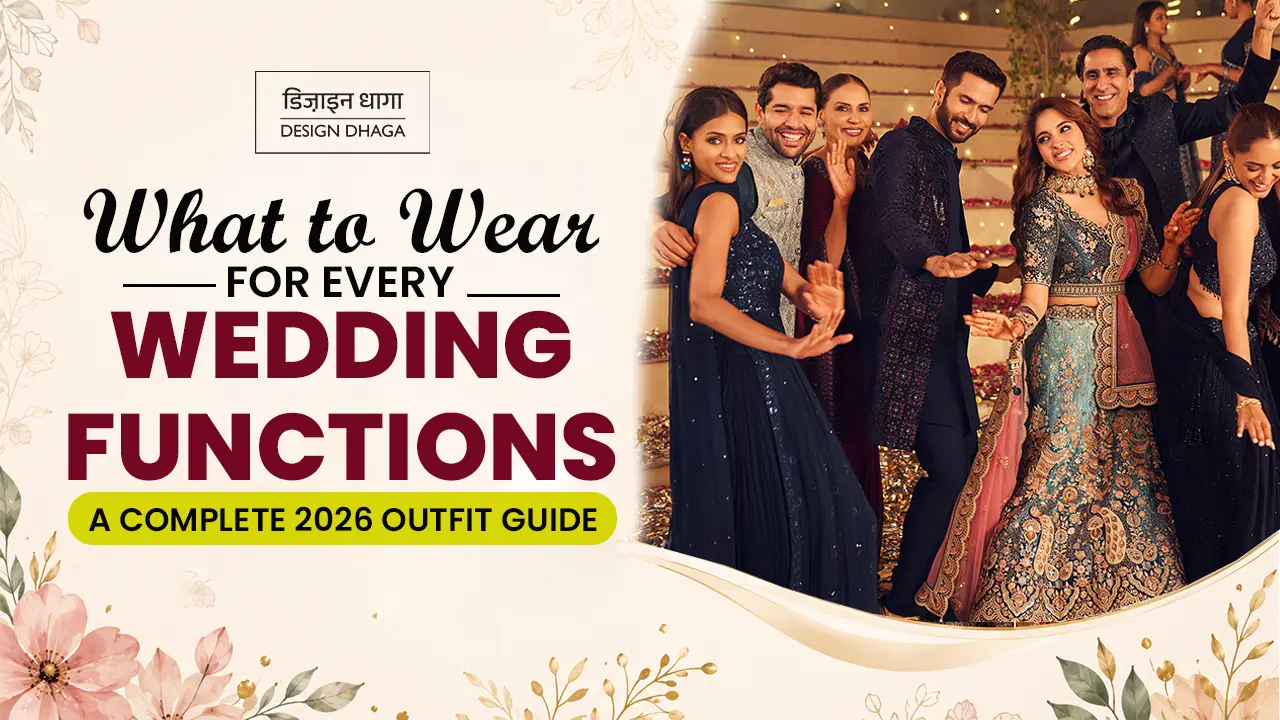
Indian weddings aren't a single event they're a run of functions, each with its own mood, dress code and unspoken rules and if you've ever stood in front of your wardrobe the night before a haldi wondering whether that saree is "too much" or "not enough" you already know the real challenge isn't finding one outfit. It's finding the right one for each function.
So here's a function by function breakdown of what actually works for haldi, mehendi, sangeet, the wedding ceremony and the reception, so you can walk into every one of them dressed right, without overthinking it at midnight.
Haldi: Bright, Breathable, Built to Move

Haldi is messy by design and your outfit needs to survive turmeric paste, flower petals and a lot of dancing.
What works well:
- Yellow, marigold or mustard toned outfits : the traditional haldi palette and the one that photographs best against the turmeric itself.
- Cotton or light cotton silk fabrics that won't stain permanently and are comfortable for hours of sitting and moving.
- Simple hand-painted florals rather than heavy embellishment, haldi is a daytime, high-movement function and heavy zari or stonework doesn't hold up well.
- A kurta set or a lehenga with a shorter, lighter skirt for women, a simple kurta pajama in cotton for men.
Best picks: A hand-painted yellow cotton kurta set or a light lehenga in marigold tones with minimal embellishment.
Mehendi: Colourful, Comfortable, Camera-Ready
Mehendi calls for colour and comfort in equal measure you'll be sitting for long stretches getting mehendi applied, so restrictive outfits are the enemy here.
What works well:
- Multi-coloured or pastel lehengas and anarkalis : mehendi is the one function where you can go as bright as you want without it feeling out of place.
- Flowy silhouettes like anarkalis or A-line lehengas that don't restrict movement while your hands are occupied.
- Hand-painted florals in multiple colours, this is the function where a statement, colourful piece earns its place the most.
- Comfortable footwear : you'll likely be seated on the floor for parts of it, so factor that into your outfit choice too.
Best picks: A hand-painted anarkali in a multi-colour floral palette or a lehenga in a soft pastel with contrast dupatta.

Sangeet: Statement, Movement-Friendly, Made to Dance In
Sangeet is a performance night, literally so your outfit needs to move with you, not against you.
What works well:
- Flared lehengas or gowns that create movement during dance performances without restricting your steps.
- Sequin, mirror-work or hand-painted metallic details that catch the light under evening/indoor lighting.
- Fitted blouses with statement backs (backless, boat neck or high-drama cutouts) sangeet is where a bold blouse back design gets noticed the most.
- Structured kurtas or bandhgalas for men in richer colours than daytime functions.
Best picks: A hand-painted statement lehenga with a backless or boat neck blouse and a bandhgala kurta set in jewel tones for men.
Wedding Ceremony: Traditional, Rich, Ceremony-Ready
The wedding ceremony itself calls for the most traditional and elaborate outfit of the entire event lineup.
What works well:
- Silk sarees or heavy silk lehengas in traditional weaves Banarasi, Kanjeevaram or similar rich silks work particularly well for this function.
- Deep, traditional colours : red, maroon, deep green, royal blue over pastels, which tend to look better suited to daytime functions.
- Hand-painted silk sarees with detailed borders, which bring craftsmanship into a very traditional silhouette without needing heavy embroidery.
- Sherwanis or silk kurta sets for men, often in coordinating tones with the bride or family colour scheme.
Best picks: A hand-painted silk saree in a traditional colour with a detailed blouse and a silk kurta set with a coordinating Nehru jacket for men.

Reception: Elegant, Contemporary, Evening Appropriate
The reception is where guests can lean more contemporary think gown-like silhouettes and richer evening-appropriate fabrics.
What works well:
- Gowns, fusion lehengas or draped sarees that feel more evening-formal than the daytime functions.
- Darker, richer palettes : wine, emerald, navy, black with gold that suit evening lighting and photography.
- Statement blouses or cutout gowns, since this is the most photographed function alongside the wedding itself.
- Structured Nehru jackets over silk kurtas for men, especially in metallic or brocade fabrics.
Best picks: A hand-painted draped gown-saree in a jewel tone or a brocade Nehru jacket over a silk kurta for men.
A Few Things to Keep in Mind Across All Functions
- Don't repeat your most photographed pieces across functions that are close together a hand-painted piece stands out more when it's seen once not three times in one wedding week.
- Match the outfit to the function, not just the guest list. A haldi-appropriate outfit at a reception (or the reverse) tends to look out of place regardless of how nice the piece itself is.
- Comfort compounds over a multi-day wedding. By day three you'll appreciate breathable fabric over one more heavily embellished piece.
- Coordinate loosely with family, not identically. A shared colour family works better across functions than trying to match exactly.

Final Thoughts
Wedding season doesn't have to mean five separate shopping trips and five separate outfits that don't talk to each other. Once you know what each function actually calls for colour, fabric, movement building a wardrobe for the whole event becomes a lot more straightforward.
At Design Dhaga, every hand-painted piece saree, lehenga, kurta or jacket is made to order, so you can build a wedding wardrobe that's genuinely one-of-a-kind function to function. Browse our collection to find your next piece or you can customize your dress as per your choice our support team will guide you.
Need help picking outfits across multiple functions?
Message us on WhatsApp at +919671941303 and our team will help you plan the whole wedding wardrobe, function by function.
"Frequently Asked Questions"
1. What should I wear for a haldi ceremony?
Yellow or marigold-toned outfits in cotton or light cotton silk work best they photograph well against the turmeric and are comfortable for a long, high-movement function.
2. Can I wear the same lehenga for mehendi and sangeet?
You can, but it's worth choosing different colours or styling it differently (a different blouse or dupatta drape) since these two functions are often close together and heavily photographed.
3. What's the difference between what to wear for the wedding ceremony vs the reception?
The wedding ceremony calls for traditional silhouettes like silk sarees or heavy lehengas in classic colours, while the reception allows for more contemporary pieces like gowns, fusion lehengas or draped sarees in richer evening-appropriate tones.
4. What should men wear for each wedding function?
Cotton kurta pajamas work well for haldi and mehendi structured kurtas or bandhgalas suit sangeet, sherwanis or silk kurta sets fit the wedding ceremony and a Nehru jacket over a silk kurta works well for the reception.
5. Is hand-painted clothing appropriate for a wedding ceremony?
Yes, a hand-painted silk saree or kurta set brings a distinct, artisan detail to traditional silhouettes without needing heavy embroidery and works well for both the ceremony and reception.
6. How many outfits do I actually need for a multi-day wedding?
At minimum, one outfit per function you're attending typically five for haldi, mehendi, sangeet the wedding ceremony and the reception though colour families can be coordinated to reuse accessories across functions.
7. What colours should be avoided at a wedding as a guest?
As a guest, it's best to avoid wearing all-white or all-red outfits, which are traditionally reserved for the bride (red) or considered inappropriate for celebratory functions (white) in many Indian wedding traditions.

.webp)
.webp)
.webp)
.webp)

.webp)


 Continue with Google