Everything You Need to Know About Phulkari Dupatta Designs and Suits
by Divya Maherda
4-September-2026
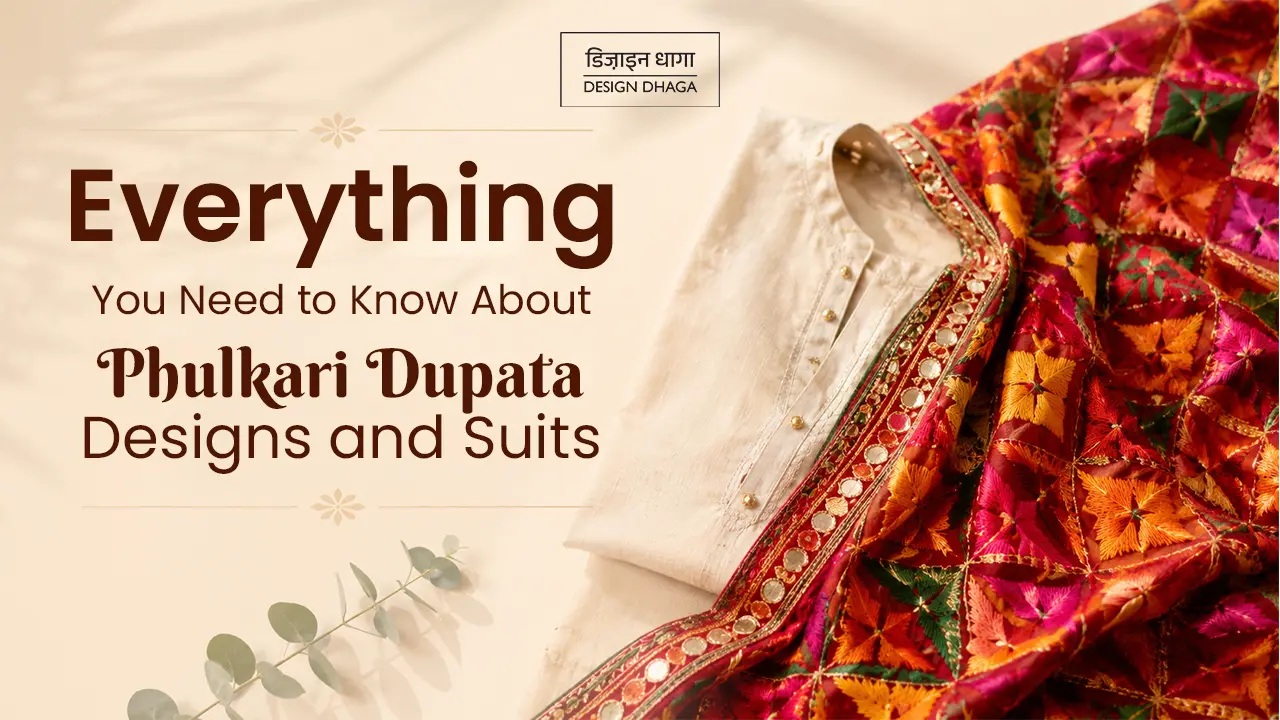
If you've ever seen a dupatta so bright and busy with color that it stopped you mid scroll there's a good chance it was phulkari. This is one of those crafts that doesn't try to be subtle and honestly that's the whole point.
Here's everything you need to know before you buy one, style one or fall in love with your first phulkari dupatta design.
What Is Phulkari Really?
Phulkari literally means "flower work" - phul (flower) and kari (craft) and it comes from Punjab, where it was traditionally done by hand on hand-spun, hand-woven khaddar cloth. Women would embroider dupattas and odhnis for weddings, festivals and family milestones often working on a single piece for months.
The stitch itself is deceptively simple mostly darn stitch, worked from the back of the fabric so the front builds up this dense almost woven look of color. What makes it distinct from other embroidery styles is the geometry triangles, diamonds and flower motifs repeated in bold, saturated threads, usually in yellows, oranges, pinks and reds against a darker base.
It's not delicate embroidery. It's meant to be seen from across a room.
Types of Phulkari Dupatta Designs

Not all phulkari is the same and knowing the difference actually matters when you're choosing one.
Bagh phulkari - "Bagh" means garden and in this style the embroidery covers the entire fabric so densely that the base cloth barely shows. This is your heavy phulkari dupatta territory rich, saturated and traditionally reserved for weddings and major celebrations.
Chope - Worked in a two sided satin stitch so the pattern looks identical on both sides. Chope dupattas were traditionally gifted by a maternal grandmother at a girl's wedding, which still gives them a sentimental weight even in modern versions.
Sainchi phulkari - This is the storytelling version. Instead of pure geometry, sainchi work includes figures village scenes, trains, animals, everyday life embroidered into the design. Rarer to find today but stunning when you do.
Modern phulkari dupatta design - What you'll find most commonly now blends traditional motifs with lighter thread work, making it more wearable day to day rather than only for big functions. This is usually what people mean when they search for a regular phulkari dupatta design rather than a heavy one.
Heavy Phulkari Dupatta vs. Light Phulkari : Which One Do You Need?
This is the first real decision to make and it comes down to how you plan to wear it.
A heavy phulkari dupatta - dense embroidery, bold colors, often with a wider border is built for weddings, sangeet functions and festive days where you want the dupatta to be the statement piece. It pairs beautifully with a plain suit which brings us to the next big question people have.
A lighter phulkari design - with embroidery placed more sparingly, maybe just along the borders or scattered across the fabric works for everyday wear, office-appropriate ethnic days or casual family gatherings where you want a touch of tradition without the full weight (literally - heavy phulkari dupattas can be substantial fabric).
How to Style Phulkari Dupatta with Suits:

This is probably the most searched question around phulkari and for good reason it's genuinely one of the most versatile dupattas you can own.
Phulkari dupatta with plain suits is the classic pairing and it works because the embroidery does all the talking. A plain cotton or silk suit in a solid color white, off-white, mustard or a deep contrast like navy or maroon, lets the phulkari colors pop instead of competing with a printed or embellished suit.
A few combinations that consistently work well:
- White or cream suit + multicolor bagh phulkari dupatta : clean, classic, festival-ready
- Mustard yellow suit + red or pink phulkari dupatta : a traditional Punjabi color pairing that never goes out of style
- Deep maroon or bottle green suit + orange-toned phulkari : richer, more wedding-appropriate
- Pastel suit + lighter phulkari border work : softer, better for daytime functions or office ethnic days
If you're wearing a heavier phulkari dupatta keep the rest of your outfit minimal simple jewelry, no clashing prints on the suit and let the dupatta be the focal point. If you're going with a lighter, everyday phulkari design you have more room to play with color and pattern on the suit itself.
How to Choose the Right Phulkari Dupatta
A few things worth checking before you buy:
Fabric base - Traditional phulkari is done on khaddar (a coarse, hand-woven cotton) but you'll also find it on chiffon, georgette and silk bases today. Khaddar and cotton give a more authentic, structured drape, chiffon and georgette are lighter and easier to style for everyday wear.
Thread work density - Run your hand across the embroidery. Denser more textured thread work usually signals more hours of craftsmanship and that's part of what you're paying for with genuine phulkari.
Color balance - Good phulkari work has a rhythm to its color placement not just random bursts. If the colors feel scattered rather than patterned, it's often a lower-quality or machine-replicated piece.
Hand-done vs. machine-embroidered - Hand-embroidered phulkari has slight, natural irregularities in the stitching that's actually a good sign, not a flaw. Perfectly uniform, machine-made stitching lacks the texture and depth of the real craft, even if it's cheaper.

Occasion Guide: When to Wear What
- Weddings & sangeet → Heavy bagh phulkari dupatta in bold, saturated colors
- Festivals (Baisakhi, Lohri, Diwali) → Mid-weight phulkari with a plain or lightly printed suit
- Family functions / daytime events → Lighter phulkari design, pastel or neutral suit base
- Everyday ethnic wear / office → Border-only phulkari work on a simple cotton suit
- Gifting (especially for a wedding) → Chope-style phulkari, which carries traditional sentimental meaning
Caring for Your Phulkari Dupatta

Hand embroidery needs a little extra care to stay looking sharp for years:
- Dry clean heavy or silk-base phulkari dupattas especially ones with dense thread work.
- For cotton/khaddar phulkari hand wash gently in cold water and avoid wringing squeeze the water out instead.
- Always dry in shade never direct sunlight which fades the thread colors over time.
- Store folded (not hung) in a breathable cotton cloth not plastic to prevent the threads from snagging or the fabric from yellowing.
- Iron from the reverse side on a low setting to protect the embroidery
Common Mistakes to Avoid
- Overdressing the suit - pairing a heavy phulkari dupatta with an already embellished or heavily printed suit so the two compete instead of complementing each other.
- Ignoring fabric weight when styling - a heavy khaddar phulkari dupatta on a very lightweight chiffon suit can look unbalanced match the weight and formality.
- Assuming all phulkari is the same price - hand-embroidered pieces take genuine time and skill, so a significant price gap between two "phulkari" dupattas often reflects hand-done work vs. machine replication.
- Washing heavy embroidery like a regular dupatta - this is the fastest way to damage the thread work when in doubt, dry clean.
“Frequently Asked questions”
1. What is the difference between phulkari and bagh phulkari?
Phulkari refers to the embroidery style broadly while bagh (meaning "garden") is a specific type of phulkari where the embroidery covers the fabric so completely that the base cloth is barely visible. Bagh is generally heavier and more festive.
2. Can phulkari dupattas be worn with plain suits only or do they work with printed suits too?
Plain suits are the safest and most classic pairing since they let the embroidery stand out. But a phulkari dupatta can work with a subtly printed or textured suit too as long as the print is small-scale and doesn't compete in color intensity with the embroidery.
3. Is heavy phulkari dupatta suitable for daily wear?
Not really, heavy, densely embroidered phulkari is best saved for weddings, festivals and special occasions. For daily wear a lighter phulkari design with embroidery limited to the borders is far more practical and comfortable.
4. How do I know if a phulkari dupatta is hand-embroidered and not machine-made?
Look closely at the stitching hand-done phulkari has small natural irregularities and slightly varying stitch tension giving it texture and depth. Machine-embroidered pieces tend to look too uniform and flat in comparison.
5. Do you deliver phulkari dupattas across India or only locally?
We ship pan-India, every phulkari dupatta is made by hand, so we'd always recommend browsing our current collection directly to see what's in stock rather than searching for a store "near me" our artisans are working from Hisar, but your dupatta reaches you wherever you are. We design these dupatta for customize orders only as of now.
.webp)

.webp)


.webp)
.webp)


 Continue with Google