Saree Draping Styles: Bengali, Gujarati & South Indian Guide
by Priti Sharma
18-August-2026
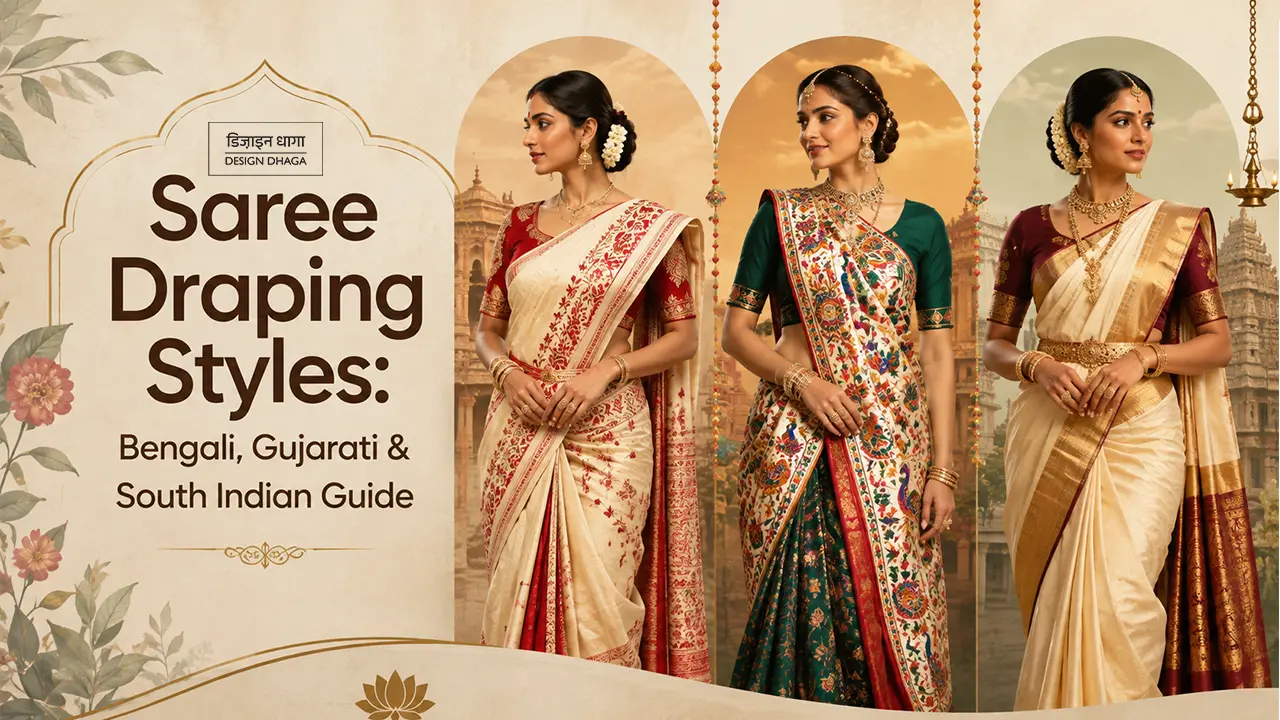
The same nine yards can look like three completely different outfits depending on how they're draped. That's the part people forget when they're saree shopping the fabric matters but the drape is what actually decides how the saree sits, moves and photographs. A Bengali drape falls differently from a Gujarati one and a South Indian drape is built for an entirely different kind of day.
At Design Dhaga, we get asked about this constantly especially from customers who've bought a saree for one occasion and want to know if it can be draped differently for another. So here's a straightforward guide to three of the most-loved regional draping styles Bengali, Gujarati and South Indian what makes each one distinct and when each one actually works best.
Why the Drape Matters as Much as the Saree
Two people can wear the exact same saree and look completely different and it usually comes down to the drape not the fabric or print. A few reasons the draping style deserves as much attention as the saree itself:
• It changes the silhouette, some drapes are fuller and more traditional, others are sleeker and easier to move in.
• It affects comfort and practicality, a drape that's perfect for a seated wedding ceremony isn't always the one you'd want for a full day of dancing or travel.
• It carries cultural meaning, regional draping styles are often tied to where a saree tradition originally comes from, so getting the drape right is also a way of honouring that.
• It lets one saree do more, the same saree draped in a Gujarati style for a festive morning can be re-draped Bengali style for an evening event and it will genuinely look like two outfits.
Bengali Saree Draping Style

The Bengali drape often called the "atpoure" style is instantly recognizable, it uses a broader pleat structure at the front and a distinctive way of bringing the pallu around often with keys or a bunch tucked into the waist as a traditional touch. It's one of the most searched draping styles today and it's easy to see why, it looks elegant without needing an elaborate blouse or heavy styling to carry it.
What makes it distinct:
• A wide front pleat that sits close to the body rather than fanning out.
• The pallu is brought over the left shoulder and pinned or tucked so it drapes fuller and lower than a standard drape.
• Traditionally paired with minimal, structured jewellery and a bindi letting the drape itself be the statement.
• Works beautifully with red and white sarees, but modern Bengali draping is now done with almost any saree, including hand-painted cottons and silks.
Best occasions:
Durga Puja, Bengali weddings, cultural functions and any festive event where you want a traditional look that still feels effortless.
A tip we give a lot of our customers, the Bengali drape works especially well with lighter cotton sarees since the fuller pallu needs fabric that holds its shape without feeling heavy through a long day of events.
Gujarati Saree Draping Style

The Gujarati drape sometimes called the "seedha pallu" style flips the pallu to the front instead of the back. Rather than draping over the left shoulder and falling behind the pallu comes over the right shoulder and drapes down the front, often pleated and pinned to stay in place. It's currently one of the highest searched draping styles and it's a favorite for anyone who wants their saree's embroidery, print or hand-painted detailing to actually be visible rather than hidden behind the shoulder.
What makes it distinct:
• The pallu falls in front rather than behind so the most detailed part of the saree stays on full display.
• Often finished with decorative pins or a brooch where the pallu is secured adding a small styling detail of its own.
• Works particularly well with sarees that have a heavily worked or hand-painted pallu, since the front drape means that artwork is never tucked out of sight.
• Pairs naturally with statement blouse designs, since the front pallu leaves the back fully visible too.
Best occasions:
Garba and Navratri events, Gujarati weddings, festive mornings and any occasion where you want a saree's detailing especially a hand-painted pallu to stay the focal point all day.
South Indian Saree Draping Style

South Indian draping styles cover a few regional variations but the most recognizable is the Madisar/Kanchipuram-style drape known for its structured no-pleat-fuss silhouette and a slightly shorter, practical fall that was traditionally built for movement and daily wear not just special occasions. Where Bengali and Gujarati drapes lean into a fuller more elaborate look South Indian draping tends to be neater and closer to the body.
What makes it distinct:
• A closer, more fitted drape through the waist with less fabric left loose at the front.
• Traditionally paired with rich silk sarees Kanchipuram and similar weaves though the same drape works well with cotton and hand-painted sarees too.
• The pallu is often pleated more narrowly and pinned securely since this drape was designed to hold up through a full day of temple visits functions or work.
• Tends to photograph as more formal and structured which is why it's a popular choice for classical dance performances and traditional ceremonies.
Best occasions:
Temple visits, South Indian weddings, classical dance, cultural events and any occasion where a neat structured silhouette matters more than a fuller, statement drape.
A Quick Note on Punjabi Saree Style
While Punjabi draping doesn't have a single distinct pleating technique the way Bengali or Gujarati styles do Punjabi saree styling has its own identity usually a standard front-pleat drape paired with bold colour choices, statement jewellery and often a contrast dupatta style pallu treatment. It's less about a different fold and more about how the saree is styled and accessorised.
How to Choose the Right Draping Style
If you're not sure which style suits your saree or your event here's a simple way to think it through:
• Think about how much time you'll spend seated versus moving. South Indian draping holds up well through long, active days. Bengali and Gujarati drapes suit events where you're posing for photos more than moving around.
• Let the saree's detailing guide the drape. If your saree has a heavily worked or hand-painted pallu a Gujarati front-drape keeps that work visible all day instead of tucked behind your shoulder.
• Consider the occasion's cultural context draping a saree in the regional style tied to the event (say, Gujarati for a Garba night) often feels more fitting than a generic drape.
• One saree, multiple drapes. The same saree can be re-draped for a completely different look across two events so it's worth learning more than one style if you wear sarees often.

Final Thoughts
A saree's drape is where tradition, comfort and personal style all meet and it's often the difference between an outfit that looks borrowed and one that looks like it truly belongs to you. Whether you lean toward the fuller, traditional fall of a Bengali drape, the front-facing detail of a Gujarati drape or the neat structure of a South Indian drape the right styling can completely change how a saree feels to wear.
At Design Dhaga, our hand-painted sarees are made to be draped, re draped and worn again not just for one occasion. Browse our saree collection and find a piece that works beautifully in whichever draping style you love most.
Not sure which drape suits your saree? Message us on WhatsApp at 919671941303 and our team will help you figure out the best styling for your occasion.
“Frequently Asked Questions”
1. Which saree draping style is easiest for beginners?
The Gujarati front-pallu style is generally considered the easiest to learn, since the pleating is simpler and the pallu pinning is more forgiving than the fuller Bengali drape.
2. Can any saree be draped in a Bengali or Gujarati style or does it need to be a specific type?
Most sarees can be draped in either style though lighter cottons and silks tend to hold the Bengali drape's fuller pallu better while sarees with detailed pallus look best in the Gujarati front-drape since it keeps that detailing visible.
3. Is the South Indian draping style only for silk sarees?
No, while it's traditionally associated with Kanchipuram and other silk weaves, the same structured drape works well with cotton and hand-painted sarees too.
4. How long does it take to learn a new draping style?
With a bit of practice, most people can learn a new regional drape in a few tries. Watching a step-by-step video alongside a mirror usually helps more than reading instructions alone.
5. Which draping style holds up best for a full day of events?
The South Indian drape is generally the most practical for long, active days, since it sits closer to the body and stays secure through movement.
6. Can I get a saree custom hand-painted to suit a specific draping style?
Yes, many of our customers tell us which drape they plan to wear and we place the hand-painted design accordingly so it shows beautifully in that style. Message us on WhatsApp to get started.
7. Does the blouse design matter for these draping styles?
It does, A Gujarati front-drape leaves the back fully visible so a statement or backless blouse works well. A Bengali or South Indian drape tends to show more of the front so the blouse's front design gets more attention there.
.webp)
.webp)
.webp)


.webp)


 Continue with Google