Handmade Crochet Rakhi 2026: Designs, DIY Guide & Where to Buy
by Divya Maherda
10-August-2026
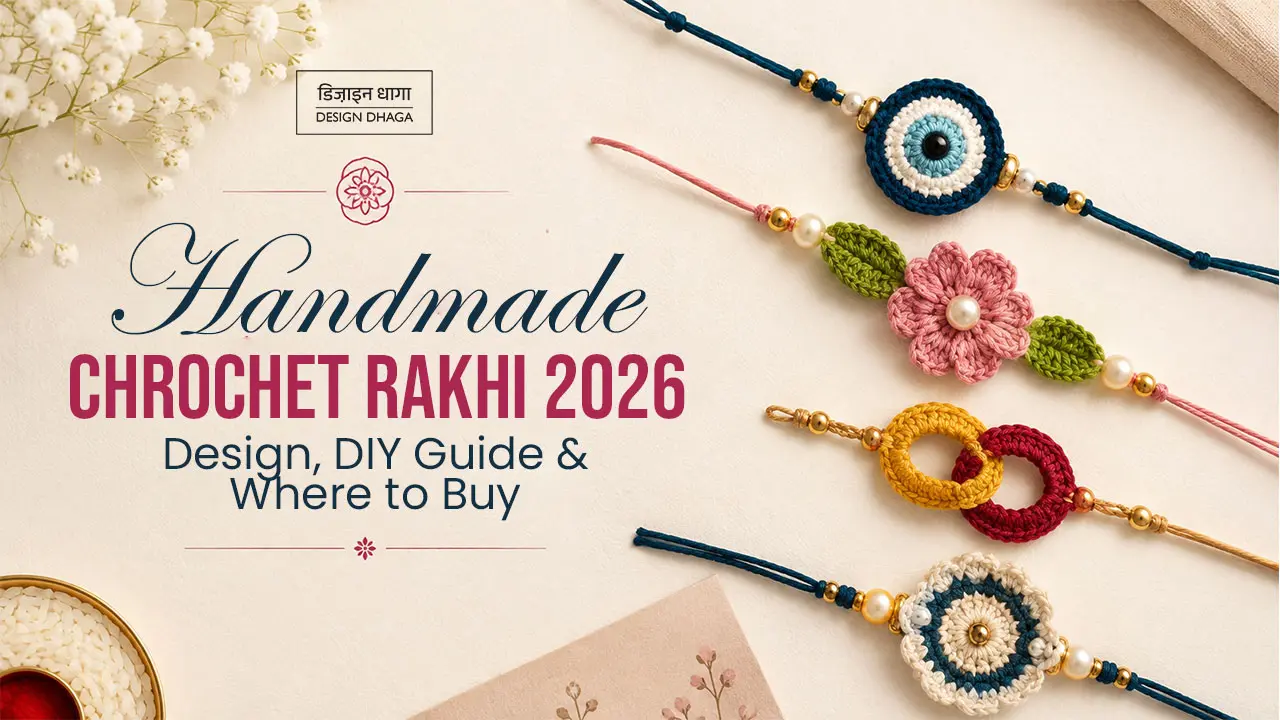
A crochet rakhi is one of those rare things that manage to feel both traditional and completely contemporary at the same time. It carries the same intention as the mauli thread that started the tradition, a sister's love, tied around her brother's wrist but it is made by hand, loop by loop in a way that makes every piece genuinely unique. In 2026, handmade crochet rakhis have moved from a niche craft project into one of the most searched and most gifted rakhi categories of the season. This guide covers everything, the most popular crochet rakhi designs of 2026, a complete beginner-friendly DIY guide with materials and techniques, and how to identify and buy genuinely handcrafted crochet rakhis online.
Why Crochet Rakhis Are Trending in 2026
The shift toward handmade rakhis has been building for several years, but 2026 is the year it has become a mainstream preference rather than a craft enthusiast's choice. Three specific reasons explain this shift.
First, the handmade quality is genuinely different. Unlike machine moulded plastic or harsh metallic threads, a handmade crochet rakhi feels soft and comfortable against the skin. It is crafted loop by loop with pure cotton thread or vibrant yarn, giving it a texture that mass-produced rakhis simply cannot replicate. Brothers frequently keep handmade crochet rakhis for weeks after Raksha Bandhan because they are comfortable enough to wear daily.
Second, crochet rakhis are personalised by nature. Because each one is made by hand, it can be made in the recipient's favourite colours in a design that matches his personality or with a small charm or bead that carries specific meaning. A crochet rakhi is not chosen from a catalogue, it is made or chosen for one specific person.
Third, the environmental consideration matters. A crochet rakhi made from cotton thread or natural yarn is biodegradable and eco-friendly. It does not contribute to the plastic waste that mass-produced rakhis generate in enormous volumes every year around Raksha Bandhan.
Part 1: The Most Popular Crochet Rakhi Designs of 2026
- Evil Eye Crochet Rakhi

The evil eye crochet rakhi is the single most popular design of 2026 and its appeal makes complete sense for Raksha Bandhan specifically. The evil eye a symbol of protection from negative energy aligns perfectly with the festival's central theme of a sister's protection for her brother. Protection as both symbol and sentiment, stitched into the rakhi itself.
The design typically features a crochet base in white or cream, with a central evil eye motif in shades of blue and white. The bead in the centre, usually a glass or resin evil eye bead is encircled by delicate crochet stitches that hold it in place while creating a frame around the motif. The overall effect is modern and minimalist making it a strong choice for brothers who prefer understated accessories over decorative ones.
Best for: Teenage brothers, young professionals, brothers who appreciate meaningful symbolism over purely decorative designs.
Colour combinations that work: White and blue (classic evil eye palette), black and gold, turquoise and white.
2. Floral Crochet Rakhi

The floral crochet rakhi is the most enduringly popular category, consistently requested across all age groups and occasions. A crocheted flower typically a daisy, sunflower or rose design sits at the centre of the rakhi with the wrist tie made from the same thread in a coordinating or contrasting colour.
The daisy crochet rakhi is the most beginner-friendly version, a simple circular centre surrounded by a single round of petals, completed in under an hour even for those who are new to crochet. The sunflower version uses a slightly larger hook and longer petals for a more dramatic, visually prominent design. The rose crochet rakhi is the most technically complex, requiring a spiral construction technique that gives the finished piece genuine depth and dimension.
Best for: All ages, traditional and contemporary occasions, brothers who appreciate classic craftsmanship.
Colour combinations that work: Red and gold, white and yellow, blush and cream, orange and green.
3. Interlocked Rings Crochet Rakhi
The interlocked rings design is one of the most symbolically resonant crochet rakhi styles, two small crocheted rings linked together, representing the bond between siblings. The construction uses simple rounds of single crochet and half double crochet to create each ring, which are then linked together before the wrist ties are added.
This design works particularly well when made in two strongly contrasting colours one ring in the sister's favourite colour and one in the brother's turning the rakhi into a genuinely personal, co-created object even before it is tied.
Best for: Brothers and sisters who appreciate symbolic detail, anyone who wants a crochet rakhi that tells a specific story.
Colour combinations that work: Red and cream, mustard and navy, pink and gold, deep green and ivory.
4. Bhaiya-Bhabhi Crochet Rakhi Set
The Bhaiya-Bhabhi rakhi set, a matched pair of rakhis, one for the brother and one for his wife has become one of the most popular gifting formats for Raksha Bandhan 2026. In crochet, this format works beautifully because the two pieces can share a design motif while using different colour palettes or sizes to distinguish the brother's piece from the bhabhi's.
A common approach: the brother's rakhi in a simpler, more restrained design in dark or neutral tones and the bhabhi's piece (traditionally called a lumba) in a more elaborate, decorative version of the same motif in brighter or softer colours.
Best for: Married brothers, gifting as a complete family gesture.
5. Personalised Name Crochet Rakhi
A crochet name rakhi uses a fine hook and thin cotton thread to stitch the brother's name or initials directly into the rakhi design either as part of the central motif or along the wrist band itself. This requires more skill and time than a simple floral or evil eye design, but produces the most genuinely personal result, a rakhi that could only belong to one specific person.
Best for: Sisters with intermediate or advanced crochet skills or as a purchased piece from an artisan who takes custom orders.
6. Crochet Rakhi with Beads and Charms
Adding beads, small metal charms or crystals to a crochet base is one of the easiest ways to elevate a simple design. A small gold or silver charm an Om, a hamsa, a star or a personalised letter suspended from the centre of a crochet circle creates a finished piece that looks far more elaborate than the technique actually requires.
Beads threaded onto the wrist tie add colour and texture along the band itself and can be chosen in the brother's birthstone colour his favourite colour or simply in a festive palette that matches the year's trending combinations.
Part 2: How to Make a Crochet Rakhi - A Beginner-Friendly DIY Guide

Making your own crochet rakhi for Raksha Bandhan 2026 is one of the most meaningful ways to celebrate the occasion. The process is simpler than most people expect, and even a complete beginner can produce a beautiful result with the right materials and a little patience.
Materials You Need
Thread and yarn:
- Cotton embroidery thread (size 10 or similar): The most popular choice for fine, delicate crochet rakhis available in an enormous colour range, produces a neat, structured stitch.
- Thin cotton yarn (fingering or lace weight): Slightly thicker than embroidery thread, gives a softer, more textured finish.
- Metallic thread: Used as an accent rather than a primary material adds festive sparkle when wound through cotton base thread.
Hook:
- A 1.5mm to 2.5mm crochet hook suits most fine cotton thread rakhi projects. The exact size depends on the thread weight check the thread's recommended hook size on the label if available.
Additional materials:
- Small beads, glass evil eye beads or metal charms for embellishment
- A beading needle for threading beads onto thread
- Scissors and a darning needle for weaving in ends
- A small piece of cardboard or a ring gauge to keep the wrist tie at consistent width
Basic Stitches You Need to Know
If you have never crocheted before, three basic stitches cover every crochet rakhi design in this guide:
Chain stitch (ch): The foundation of almost every crochet project. Insert hook into a slip knot, wrap yarn over the hook and pull through the loop. Repeat for each chain.
Single crochet (sc): Insert hook into a stitch, wrap yarn over hook, pull through stitch (two loops on hook), wrap yarn over hook again, pull through both loops. One single crochet complete.
Half double crochet (hdc): Wrap yarn over hook before inserting into stitch, insert hook, wrap yarn over, pull through stitch (three loops on hook), wrap yarn over, pull through all three loops. Slightly taller than single crochet, gives a denser, rounder fabric.
These three stitches are enough to make all the designs in this guide. A 30-minute practice session with any leftover yarn before you start the actual rakhi will build enough muscle memory to work comfortably.
DIY: Simple Daisy Crochet Rakhi (Beginner Level)
This is the most accessible design for first-time crochet rakhi makers. The finished piece takes approximately 45 minutes to one hour.
What you need: Yellow cotton embroidery thread (for the centre), white cotton embroidery thread (for the petals), 2mm crochet hook, darning needle, scissors, optional small yellow bead for the centre.
Step 1 — Make the centre circle: Using yellow thread, make a magic ring (or chain 4 and join with a slip stitch to form a ring). Single crochet 6 stitches into the ring. Pull the tail to close the ring tightly. You now have a small, neat circle of 6 single crochets.
Step 2 — Add the petals: Join white thread to any stitch in the centre circle. For each petal, chain 5 then slip stitch back into the same stitch at the base of the chain. This creates one petal. Work one petal into each of the 6 stitches around the centre circle. You now have a complete daisy with 6 petals. Fasten off and weave in all ends with the darning needle.
Step 3 — Add the wrist tie: Cut two lengths of thread approximately 30cm each. Attach both lengths to the back of the daisy at the same point using a lark's head knot or by threading through the back of the centre stitches. Braid or twist the two lengths together for approximately 10-12cm, then leave the remaining length loose for tying. Repeat on the other side. The finished rakhi should have a central daisy with ties long enough to wrap around a wrist and tie in a bow.
Optional: Sew a small yellow bead to the centre of the daisy for a more polished, finished appearance.
DIY: Evil Eye Crochet Rakhi (Beginner to Intermediate Level)
This design takes approximately one to one and a half hours and requires one evil eye glass bead (available in most craft stores and online).
What you need: White and blue cotton embroidery thread, 1.75mm or 2mm crochet hook, one evil eye glass bead (approximately 12-15mm), darning needle, scissors.
Step 1 — Make the base circle: Using white thread, chain 4 and join to form a ring. Round 1: Chain 1, single crochet 8 stitches into the ring, join with a slip stitch. Round 2: Chain 1, work 2 single crochets into each stitch around (16 stitches total), join with a slip stitch. Fasten off, leaving a tail for sewing.
Step 2 — Add the blue border: Join blue thread to any stitch on the outer round. Chain 1, single crochet into each stitch around, join. Fasten off and weave in ends.
Step 3 — Attach the evil eye bead: Using the white thread tail from the centre, sew the evil eye glass bead securely to the centre of the crochet circle. Pass the needle through the bead and through the crochet base at least 3-4 times to ensure the bead is firmly attached and will not move or fall off with wear.
Step 4 — Add the wrist tie: Attach white thread ties as described in the daisy rakhi guide above. For an evil eye rakhi, blue and white mixed ties work well alternate one strand of blue and one strand of white in the braid.
Tips for Making Your First Crochet Rakhi Successfully
Start with cotton thread, not wool or acrylic yarn. Cotton holds its shape better for small, precise work, and the finished piece lies flatter and looks neater than yarn-based rakhis in most beginner hands.
Keep your tension consistent. Uneven tension alternating between pulling too tightly and working too loosely is the most common beginner challenge. Practice a few rows of chain stitches before starting the actual rakhi to settle into a comfortable, consistent rhythm.
Make the wrist tie long enough. A common mistake is making the tie too short the rakhi ends up too tight once tied and cannot be adjusted. Aim for at least 25-30cm of tie on each side before trimming.
Finish all ends securely. Weave the thread ends through at least 3-4 stitches in different directions before trimming. A crochet rakhi that unravels during or after the ceremony is both practically and emotionally disappointing.
Make a practice piece first. Use inexpensive white thread for a practice run before using your chosen colours for the final piece. The practice piece will take half the time of the real one and you will arrive at the final piece with muscle memory already established.
Part 3: How to Buy Genuine Handmade Crochet Rakhis Online
If making your own rakhi is not possible this year whether due to time, skill level or access to materials buying a genuine handmade crochet rakhi from an artisan is the next best option. The challenge is distinguishing genuinely handcrafted pieces from mass-produced imitations that use "handmade" as a marketing label.
How to Identify a Genuine Handmade Crochet Rakhi
Look for natural variation between pieces. A genuinely handmade crochet rakhi will show slight, natural variation in stitch size and shape between different pieces in the same design. If every piece in a collection is perfectly identical, it is almost certainly machine made or mass-produced. Human hands cannot produce perfect mechanical uniformity and that slight variation is precisely what makes a handmade piece meaningful.
Check the stitch definition. Genuine hand-crocheted work shows clear, individual stitch definition that you can count and examine. Machine-made crochet-look fabric is typically pressed or moulded rather than actually stitched and the "stitches" do not have the same three-dimensional character as real hand crochet.
Ask about the maker. A seller or brand that can tell you who made the rakhi which artisan, which community, which technique was used is almost certainly selling genuine handcraft. Vague answers like "our craftspeople" or "made in India" without further detail are worth questioning.
Check the materials used. Genuine handmade crochet rakhis are typically made from cotton embroidery thread, soft cotton yarn or natural fibre thread. Stiff, scratchy, or obviously synthetic materials suggest machine production rather than hand work.
Price is an indicator, not a guarantee. A genuine handmade crochet rakhi takes 45 minutes to several hours of skilled artisan time to make. A price point that seems impossibly low for that amount of work suggests the "handmade" claim is not genuine. However, high price alone does not guarantee authenticity always combine price assessment with the other checks above.
What to Look for When Buying Crochet Rakhis Online
- A clear photograph showing the stitch detail up close, not just a styled product shot.
- A description that names the specific thread type and technique used
- An option to buy a single piece rather than only bulk quantities. (genuine handcraft is almost always sold individually or in small sets)
- A returns or exchange policy that acknowledges natural variation between pieces as expected and not a defect.
- Reviews that mention the soft texture, the hand-feel and the quality of finish these are the details that only genuine handcrafted buyers would mention.
Part 4: Caring for a Crochet Rakhi
A well-made crochet rakhi can last well beyond Raksha Bandhan if cared for properly many brothers choose to keep them as mementos.
During the ceremony: Tie the rakhi gently, avoiding pulling the knot too tightly. A crochet rakhi has more give than a traditional thread, but excessive tension can distort the stitches around the tie point.
For daily wear after the ceremony: Crochet cotton thread is durable enough for daily wear but avoid submerging the rakhi in water for extended periods. Brief contact with water is fine, prolonged soaking can loosen the thread and cause the stitches to soften and lose their shape.
For storage or keeping as a memento: Store flat in a small box or envelope rather than folding, crochet fabric holds its shape better when stored without sharp fold lines. For long-term storage a small sealed bag or box keeps the thread from gathering dust or fading.
Common Mistakes to Avoid with Crochet Rakhis
When making your own:
- Starting with too fine a thread before developing thread control begin with a medium-weight cotton and move to finer threads as your skill builds.
- Skipping the practice piece the time saved is lost in the extra ajustments required on the real piece.
- Attaching the wrist tie asymmetrically always attach both sides from the same point on the back of the rakhi to ensure it sits centred on the wrist when tied.
When buying online:
- Ordering too late, genuine handmade pieces are made in limited quantities and often sell out 10-14 days before Raksha Bandhan
- Choosing based on price alone, the cheapest "handmade" crochet rakhis are almost never genuinely hand-crocheted
- Not checking the wrist tie length, a beautiful crochet rakhi with a too-short tie cannot be properly worn always check the listed measurements or ask the seller before ordering.

Final Thoughts
A crochet rakhi is one of the most honest expressions of what Raksha Bandhan is actually about. It is made by hand loop by loop, stitch by stitch in exactly the same way that the bond between siblings is built gradually, deliberately and with specific attention to one specific person. Whether you make one yourself or choose a genuinely handcrafted piece from an artisan the crochet rakhi carries that intention in a way that a mass-produced alternative simply cannot.
Raksha Bandhan 2026 falls on Friday, August 28. If you are making your own crochet rakhi start at least one week before the festival to allow time for practice the final piece and any adjustments. If you are buying one order by August 18-20 to ensure delivery before the muhurat on August 28.
Explore our handmade Festival collection, including handcrafted crochet pieces and artisan-made festival accessories at Design Dhaga Festival collection.
“Frequently Asked Questions”
Q: What is a crochet rakhi? A crochet rakhi is a handmade rakhi created using the crochet technique, where a small hook is used to interlock loops of cotton thread or yarn into a specific design. Unlike traditional thread rakhis or mass-produced plastic ones, a crochet rakhi is soft, comfortable to wear and genuinely unique because each piece is made by hand with natural variation between pieces.
Q: How long does it take to make a crochet rakhi at home? A simple daisy or basic floral crochet rakhi takes approximately 45 minutes to one hour for a beginner including the wrist tie. More complex designs such as the evil eye rakhi or interlocked rings take one to one and a half hours. A personalised name rakhi requires the most time typically two to three hours depending on the length of the name and the maker's skill level.
Q: What materials do I need to make a crochet rakhi for Raksha Bandhan? The basic materials are cotton embroidery thread (size 10 is the most commonly used) a 1.5mm to 2mm crochet hook, a darning needle for finishing and scissors. Optional additions include glass beads or evil eye beads for embellishment, small metal charms and metallic thread for accent. All of these materials are available at most craft stores and online.
Q: How can I tell if a crochet rakhi sold online is genuinely handmade? Look for natural variation between pieces in the same design, clear visible stitch definition in close-up product photographs, a seller who can describe the specific thread and technique used and a price point that realistically reflects 45 minutes to several hours of skilled artisan work. Perfect uniformity, vague material descriptions, and unusually low prices are all indicators that the piece may not be genuinely hand-crocheted.
Q: Can I send a handmade crochet rakhi by post to a brother in another city or abroad? Yes, crochet rakhis are lightweight, flat and durable enough to travel well by post. Pack the rakhi flat in a small padded envelope or between two pieces of cardboard to prevent the stitches from being crushed. For domestic India delivery, post by August 20-21 for delivery before August 28. For international orders, post by August 13-15 to allow the full transit and customs window.


.webp)
.webp)
.webp)
.webp)
.webp)
.webp)


 Continue with Google